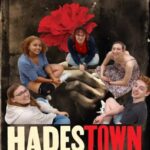
They will make you see how the world could be, in spite of the way that it is. They will sing you a song so beautiful that it brings the world back into tune. And where are you going? You’re going way down— Hadestown (Teen Edition) – way down under the ground. 21 young performers, one old, sad song— and they’re gonna tell it. They’re gonna tell it again. Children’s Playhouse of Maryland is living it up on top with their stellar and sensationally charged production of Hadestown (Teen Edition) and it will move your heart, spirit, and soul. Directed by Liz Boyer Hunnicutt with Musical Direction by Charlotte Evans and Choreography by Lauren Stuart, this grippingly beautiful musical (by Anaïs Mitchell) is the perfect conclusion to their 2025/2026 season and will move you to tears of both heartache and joy every step of the way.
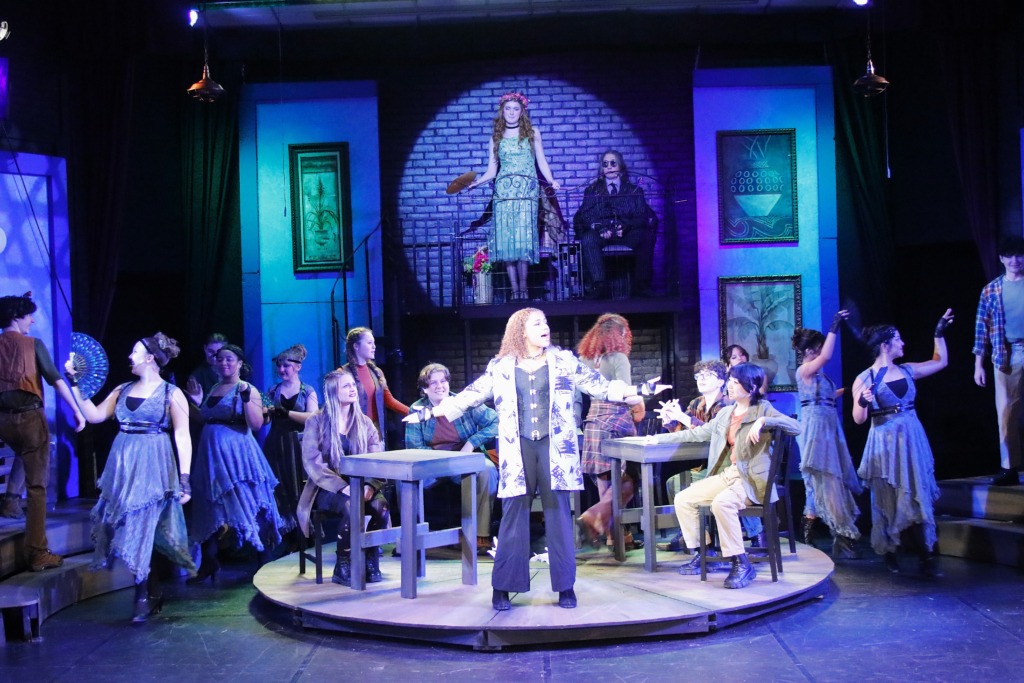
Technical Director and Set Designer Diane M. Smith has outdone herself entirely with the set, wholly encapsulating the vibes from the original production— swinging lights, French Quarter Balcony, Turntable and all. That turntable is the pièce de résistance in Smith’s scenic work because not only does it nestle itself perfectly into the center of the stage, but it allows for those iconic moments of cyclical movement which highlight several of the themes in Anaïs Mitchell’s glorious work. (And a proper shoutout to the hardest working crew in the Gods’ almighty world— Amy Bell, Mars Bell, Sivert Carlson, RJ Oakey!) The blue walls (painted by Laura Miller) add that hint of ‘life as stillness’ with the verve of art portraits in ornate frames hanging about. A timelessness, an eternal sense of being, repetitive without being identifiable; it’s as striking as the talent stacking the deck in the cast. And the wrought iron twisting staircase that leads up to Hades’ balcony is equally exquisite. Smith’s set is balanced; not too much not too little, a flawless state of equilibrium and it keeps things cozy without that foreboding sense of claustrophobia.
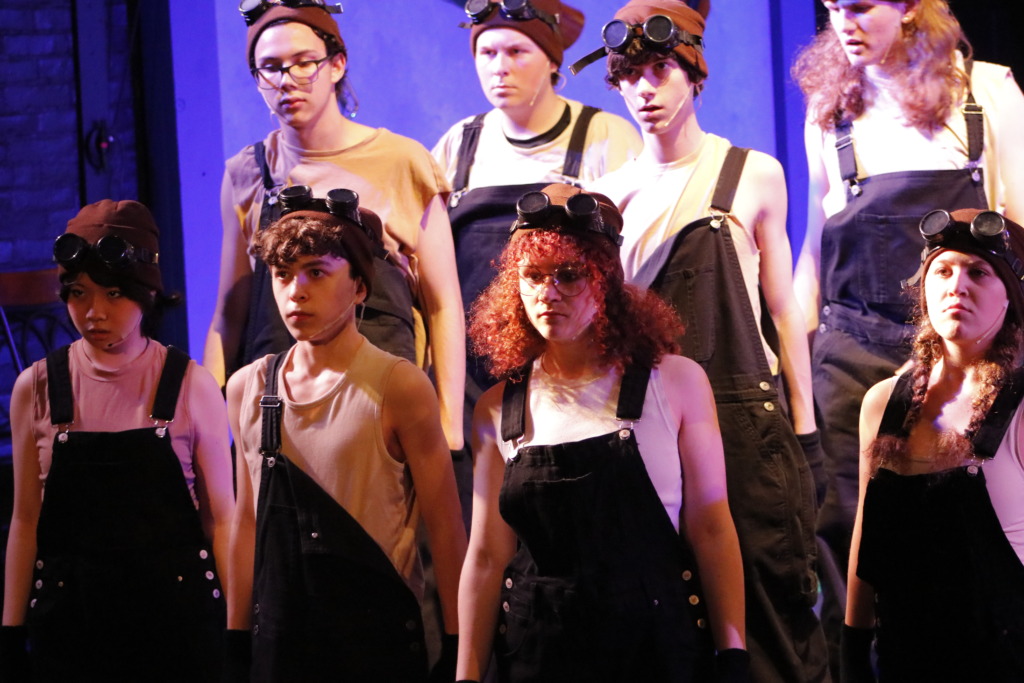
Ed Lake adds illumination to the scenic wonders (again props to Smith’s ingenuity for including the iconic swing-drop lights for the Workers) and there are moments when his dizzying gobo patterns alight on the turntable and you wonder if it’s moving, the lights are moving, or both. Moods are augmented and enhanced with Lake’s lighting and it makes a stellar experience an extraordinary one. Amy Vickers (on props) has some subtle pieces that are praiseworthy— particularly the signature red flower— contributing to the brilliance that is this production. Nicole Smith as chief costume coordinator (aided by Lizzie Jaspan and Anna Tsakalas) has fabricated magic into existence. The silvery-gray lace-rag dresses on the Fates make them appear timeless and ethereal; the pinstripe suit seen on Hades solidifies his ‘all-business’ attitude. (The diamond-sparkle-studded-wing-flanked thunder boots on Hermes are a personal favorite!) Smith, Jaspan, and Tsakalas create the uniformity of capitalism among the Workers once the story traverses its way down to Hadestown; the simple yet harrowing sameness of those overalls and worker-beanies strike the chord of facelessness amongst the repressed and impoverished under the boot of capitalism’s evils.
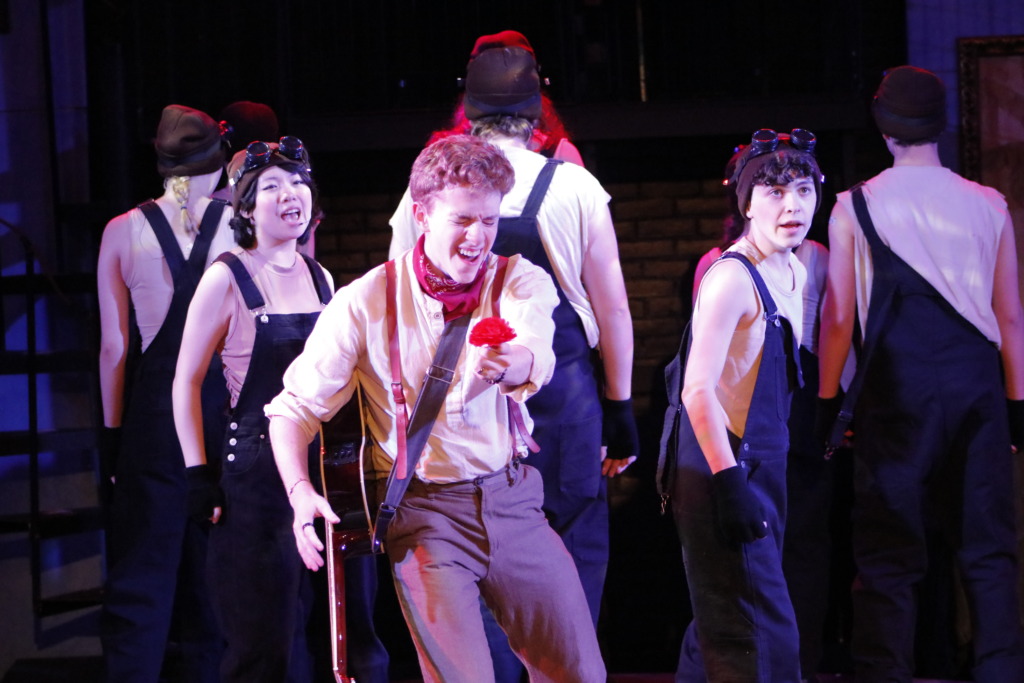
While this show isn’t ‘dance heavy’, Choreographer Lauren Stuart creates some sensational routines that really enliven the engagement factor tenfold. This is particularly true for the ensemble of ‘workers’ when they come mechanically plodding down through the house at the top of “Chant.” It’s very intense and drives home the deeper meaning of the narrative arch illustrated in the lyrics of that number. Stuart also has lots of fun movements for “Livin’ It Up On Top” and when she choreographs the dance between Hades and Persephone you feel as if the world has understood the seasons for the first time in its existence.
Musically the show is stunning. Anaïs Mitchell has penned a masterpiece and Musical Director Charlotte Evans is steering the live Hadestown Band (featuring Evans on keys/conducting, Greg Bell on bass, Gabriel Fazzino on violin, Glen Muson on trombone, Jamie Williams on guitar, Lisa Wood on drums) as well as the 21-person cast in an impeccable direction to create the exceptional sounds required to make this show a success. Having the live orchestra makes the show ten times richer— hard shoutout to Glen Muson who gets to take center-stage during one of the numbers with his trombone slide-run solo— and they’re even dressed up like a Tin-Pan Alley ban, matching the show’s overall aesthetic. Evans’ coaxes miracles out of the cast, working meticulously with the six Fates to achieve flawless harmonies that really strike the soul, particularly during numbers like “Nothing Changes”, which is a harrowing, acapella rendering that really sends shivers up the spine. The overall sound of the performance is magnificent.
Liz Boyer Hunnicutt has taken 21 young performers and allowed their talents to not only shine but radiate, flawlessly picking a perfect cast configuration. The emotions are present and palpable, they are telling the story with professional narrative caliber. The blocking is smart, the staging is intrinsically intelligent, and the overall vibe to the production is sublimely invested; this cast of 21 feels like they understand the story on all of its levels and are eager to share it with an audience. The stillness Hunnicutt inspires in some characters versus the movement she encourages in others creates an extraordinary dichotomy and it’s just such a stunning experience; Hunnicutt has created magic with this stellar cast of 21.
The Hermes character even says it— “the hardest working chorus in the Gods’ almighty world”— and it’s true! An ensemble of ten— Jack Atkins, Lucas Baldwin, Luke Depew, Andrew Koch, Vinny Mecca, Kara Neat, Colton Roberts, Gracie Roberts, Jayde Wild, Mia Ye— they carry some of the most glorious sounds in the production, particularly when it comes to making numbers like “Chant” and “Way Down Hadestown” feel rich and sound fulsome. They chant with heaviness during “Why We Build the Wall” and the surge of power that they produce during the call and response of that number is astonishingly intense. Atkins, Baldwin, Depew, Koch, Mecca, and Colton Roberts get a chance to showcase cheeky little dance moves with Persephone during “Our Lady of the Underground”, which is a unique experience. Overall these ten powerhouse vocalists add so much joy and depth to the production its impossible to imagine any other group of wonders in their place.
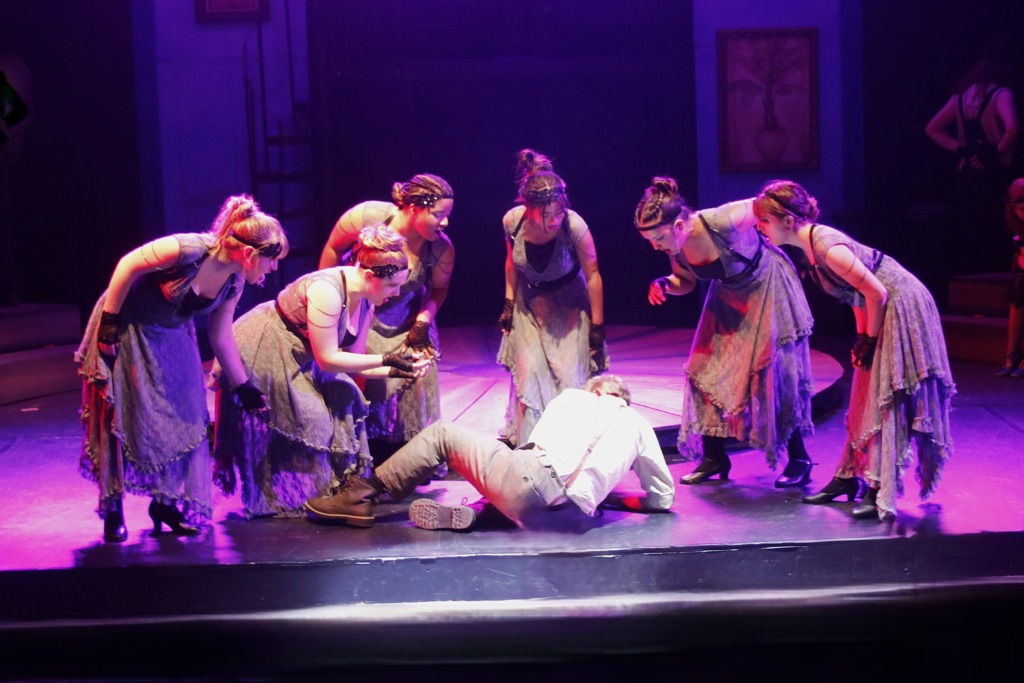
A spectacular sextet of Fates— Lily Anderson, Kaitlyn Bell, Kayla Marie Camarao, Miranda Cockey, Aveon Green, Emma Kessler— swirls menacingly about the stage, sometimes moving in their physical stillness whilst seated in their chairs fanning themselves, sometimes actively spinning their bodies around the stage and they create a dizzying maelstrom of universal discomfort that is beyond exquisite. The facial expressions alone on these six young ladies— particularly Anderson, Camarao, and Cockey— are beyond intense, especially when they’re staring down both Eurydice and/or Orpheus. It becomes the unsettling stuff of nightmares. The moment where these six blow the audience away with unfathomable talent, pitch-perfect and strikingly blended harmonies is that acapella moment during “Nothing Changes.” It’s such an intense moment you’ll feel it shake your soul. Anderson, Cockey, and Green even have a moment where they take up live instruments (just like the Fates in the original) with Anderson on violin, Cockey borrowing the Squeezebox accordion (which Colton Roberts plays during other ensemble moments) and Green having finger cymbals; it’s splendid. The way these six whisk themselves about the stage stirs the sensation that they are wind, they are spirit, they are not of this world and it’s a sublime experience to witness. Add to that their electrifying vocal harmonies and it’s a musical theatre feeling you won’t want to miss. When they’re blocked six-across on the turntable for that heartbreaking pause at the end of “Doubt Comes In” it’s really harrowing; watch their body language and facial expressions, in addition to what’s actually happening in that moment, and you’ll feel it through your very bones. The Fates back a great deal of other numbers and they play up levels of spirited emotion as well, the sassiness that sizzles through them for “When the Chips Are Down” burns and tingles, the eerie desperation that echoes through them for “Wait For Me” creates pain in the heart, and that daunting feeling of uncertainty that they produce for “Doubt Comes In” is truly haunting.
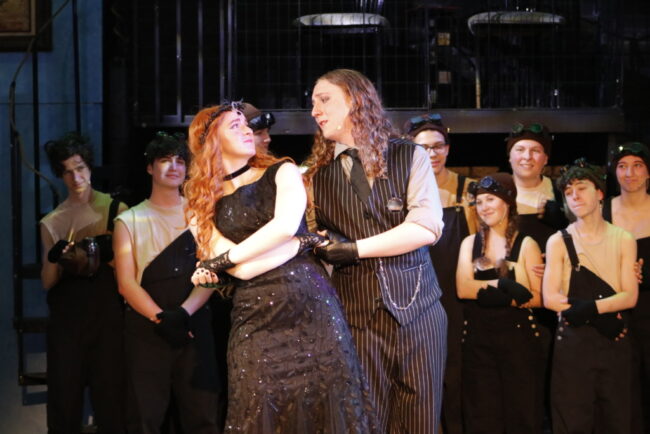
Stoic and stonelike, the stillness that Cormac Coleman is able to achieve in the roles of Hades is truly remarkable. After the brief introduction by Hermes, where Coleman’s character stands up from his balcony chair and then sits back down, he spends a good deal of time just sitting, hidden behind his sunglasses, observing, statuesque. And it’s unsettling in the best way possible. The lower register in which the role of Hades is written is a challenge for fully-vocally developed adult performers, but it’s one that Coleman rises to sublimely, particularly when singing “Hey, Little Songbird.” There is a tenacity and ferocity that Coleman infuses in his stage presence that effuses its way into his speaking voice and his singing voice and it will give you goosebumps. What’s truly brilliant about Coleman’s performance is the way those little fissures, those microscopic cracks in that stone-faced façade start to crack and fizzle through. You get the first hints of it during “Why We Build the Wall” when he nails that throat growl of primal fear-turned-fury. And there is a definitive arch of change, however subtle, that Coleman presents during “Epic III” (and points thereafter; full-disclosure, by the time this cast hits “Epic III”, you’re just weeping openly in that gut-wrenching, cathartic, ugly-cry way through to the end so it’s difficult to tell what is what.) You see that glimmer of softness, that hint of love, that moment of vulnerability, and Coleman expresses it in such a gentle, believable way that your heart just bursts. His interactions with Persephone take a similar trek, hardened to melting, and its exquisite.
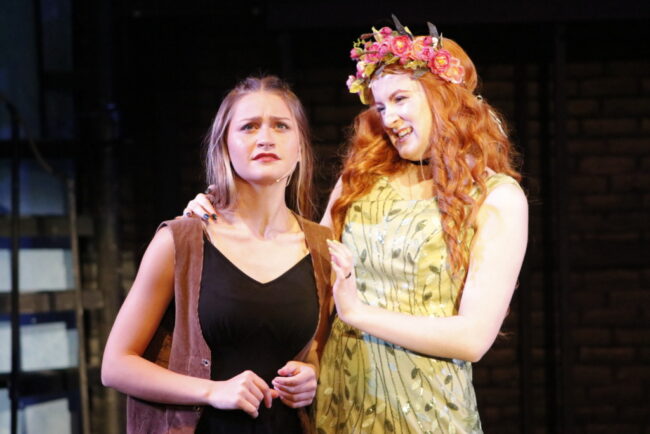
Our Lady of the Underground, aka Persephone (Catherine Ace Angelos), is a tour du force. Evocative, expressive, engaging, wholly invested, how anyone could takes their eyes off of Angelos’ performance at any point when they are on stage is inconceivable. Angelos is truly a suitcase full of summer when the character of Persephone is first introduced, glowing like midsummer sunlight, ready to celebrate with all the joys of the season. But Angelos is versatile too. When the character gets flipped back to the underworld— complete with black mourning dress costume change— the entire demeanor that Angelos presents flips too. And it’s a stark contrast of ‘vivacious summer bright’ to ‘trapped misery’ and the audience is here for it. There is an indefatigable emotional fountain that it just rolling through Angelos’ body language, facial expressions, and voice from start to finish, meticulously metered to the situation and song. When Angelos starts splashing about for “Livin’ It Up On Top” you’ll find it nearly impossible to not jump up and want to join in the dance magic and energetic effervescence that is being brought to the stage. Vocally Angelos is a force to be reckoned with. The unadulterated agony and grief heard in Angelos’ voice when “How Long”, the duet shared with Hades, arrives is moving. But the most stunning moment of Angelos’ stage time is the array of emotional expressions during right before and moving through “Epic III”, you can watch an entire odyssey of pathos play out on Angelos’ face, in their body language, and when they dance it’s extraordinary.
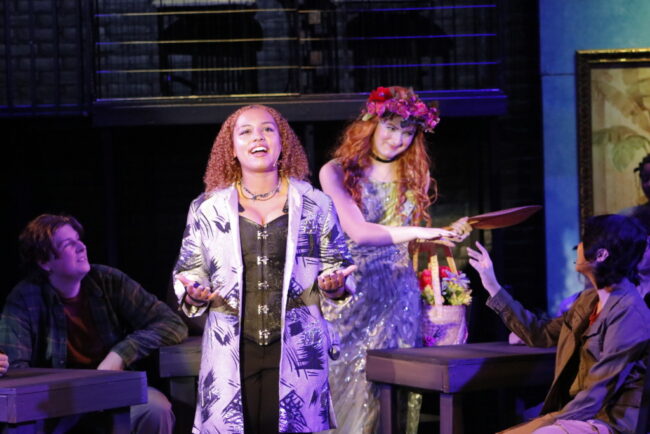
Cheeky, charming, narrating the tale, taking the audience and the characters on this well-known journey of repetition without ever letting it get stale, Mrs. Hermes (Allyson Gray) is ready and doing her own thing and she’s doing it divinely. The moment that really makes the performance for me is that consternation and stillness that’s written on Gray’s face, exchanging glances between Hades and Orpheus; it reads hard with the notion of “I’m just telling the story even though I feel all sorts of ways about it and know I cannot change the course of fate.” The intensely elevated levels of acting that Gray puts into explaining to Orpheus the terms of Hades’ conditions late in the second act is equally sublime when it comes to having constructed and fully understood the Hermes character. Gray is a vocal knockout, and nails that intro number, “Road to Hell” with panache, pluck, and more pizzazz than a whole chorus line of professional performers. The shift in Gray’s attitudes are both subtle and overt, depending on what the moment calls for, and she handles those transitions with deft sincerity, letting Hermes be the audience’s conduit to the tale without feeling like she’s putting on a show or trying to play-up this role to be something humorous. The cheekiness and the jovial nature come naturally for Gray and it makes for an honest interpretation of both character and tale. Gray lends her vocals to quite a few numbers but the way she approaches “Road to Hell (Reprise)” will leave you shaking with every conceivable emotion.
Orpheus (Max Ozbolt) was a poor boy. And Eurydice (Lilah Fodel) was a hungry girl. And oh my words and stars do these two talented youths knock this storyline clear out of orbit. The layered complexity that Ozbolt is bringing to this character is extraordinary beyond compare. There are so many moments of subtle ‘déjà vu’ that you find yourself getting shivers up and down the spine. You’ll catch a glimpse of familiarity on his face when he hugs Eurydice or holds her close; you can see the internal process inside his mind of “I remember this…but I can’t because it’s never happened.” This is most noticeable during “All I’ve Ever Known,” a duet where their voices are glittering galaxies of perfection. His mind cannot recall her, but his heart and soul and spirit remember the connection. And that speaks volumes to the cyclical nature of this story as a whole. The chemistry between Fodel and Ozbolt is sublime, particularly when they tease at one another through “Wedding Song.” And the way Ozbolt attempts to physically protect her, physically pulling her away and back to him during “Way Down Hadestown” is really a touching moment.
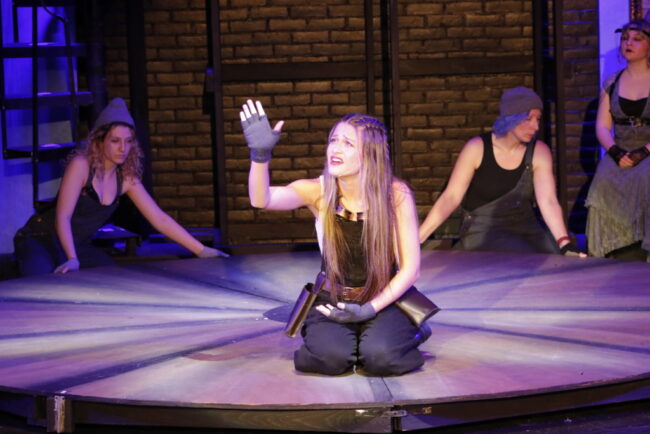
Fodel as Eurydice is a sensational dream come true. She possesses exquisitely expressive facial features, particularly those doubt-laden ones upon her initial arrival and meet-cute with Orpheus. Fodel delivers this burst of vocal sunlight as her spirit warms when she sings “All I’ve Ever Known” and you feel her heart exploding with joy in that moment. “Flowers” will make you weep because Fodel’s voice is so beautiful, so emotionally intense, and so sincere. There are dozens of little moments where she commands the stage simply by standing still upon it— when Hades makes that predatory approach for “Hey, Little Songbird” or when the Fates taunt her mercilessly during “When the Chips are Done.” And she’ll break your heart with “Gone, I’m Gone.” There is such exquisite depth in her performance, both singing and reacting, acting and carrying emotional fortitude at the front of her portrayal that you’ll desperately cheer her on every step of the way.
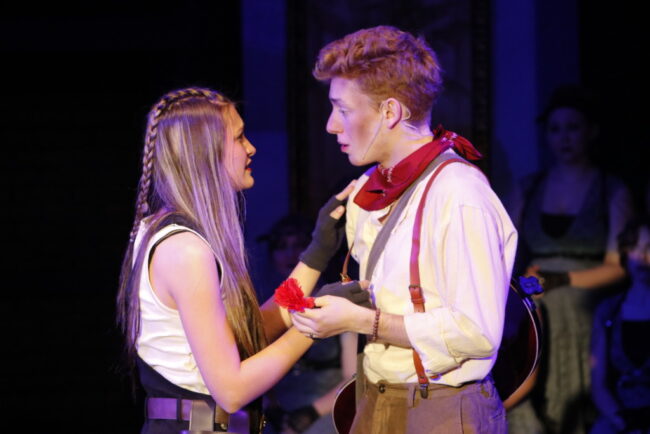
Ozbolt’s Orpheus is a marvelous contradiction of emotional intensity that will just toss your heart into the washing machine of the world, and still make you believe in love, hope, and beauty, despite everything his character goes through. And that voice— the true songbird sound of a young boy who’s fallen deeply in love with both the girl and the world as it could be— sublime. Particularly “Epic II”, where his emotional phrasing is intensely loaded with sincere intentions, so much so that you find yourself hanging on every lyric right at the edge of your seat. Emotionally expressive, vocally sensational, Ozbolt lives as Orpheus as if the role were written solely for him. “Wait for Me” and its respective reprise are a showcase of Ozbolt’s emotional heart as a performer and his stunning capabilities as a singer. “If It’s True” is such a tragically beautiful and broken sound that you can feel your soul breaking with Ozbolt in that moment. There aren’t enough words to aptly do him justice in this role. And mostly that’s true of the entirety of this whole production. He’s giving the most phenomenal performance of a lifetime— the whole cast of 21 are— and it’s emotionally evocative, eviscerating, and will simultaneously heal the emotional wounds it creates along the journey.
Children’s Playhouse of Maryland has an exquisite production of Hadestown (Teen Edition) on their hands and it’s an absolute must-see, for fans of the show, for those new to the show, and if you miss it, you’ll never know the beauty and the wonder of how the world could be instead of the way it is.
Running Time: 2 hours and 20 minutes with one intermission
Hadestown (Teen Edition) plays through May 17th 2026 with Children’s Playhouse of Maryland in the Lecture Hall of the Administration Building at the Community College of Baltimore County Essex Campus— 7201 Rossville Boulevard in Baltimore, MD. For tickets call the box office at (443) 840-2426 or purchase them online.
To read the “Livin’ it Up on Top Interview” with the Five Graduating Seniors of CPM, click here.