author: Ryan J Bordenski
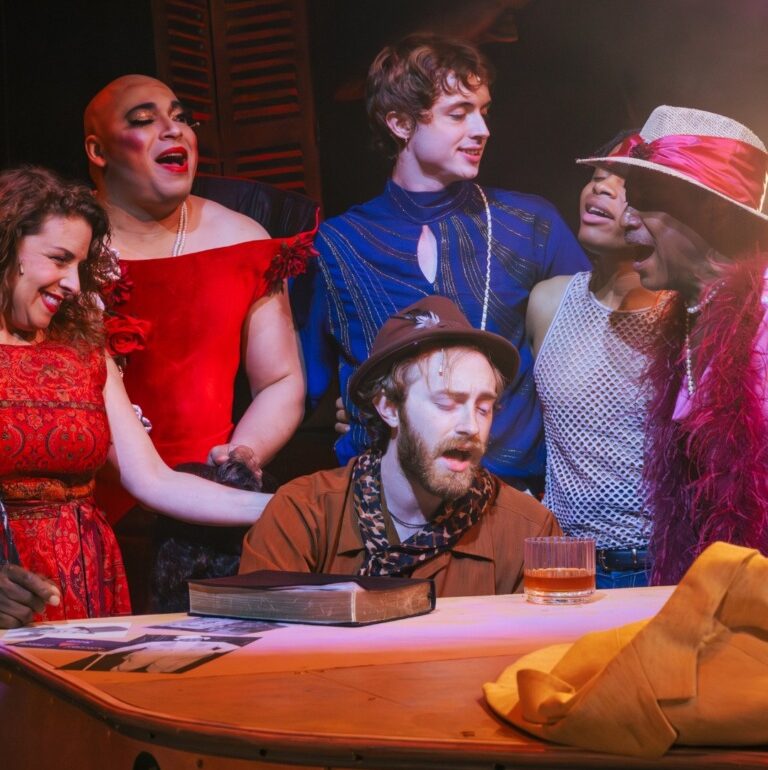
Something big, bold, and beautiful is happening in Baltimore, and it’s here just in time for Pride Month! That’s right: we are talking about The View Upstairs, over at Iron Crow Theatre, directed by Sean Elias, stage managed by Haley Baugues, assistant stage managed by Lauren Marsh and Janell Hill (special shoutout to Hill for the iconic spotlight moments), and produced by Natka Bianchini. This queer musical debuted Off-Broadway in 2017, and is rarely done. Set in a hidden bar in New Orleans, Louisiana, in the 1970s, named the “UpStairs Lounge,” The View Upstairs follows the lives of friends, compadres, and acquaintances alike who each possess their own internal struggles, but come together through the power of queer community. The show is inspired by the historic arson tragedy that struck the UpStairs Lounge on June 24, 1973, as each character emulates one of the many tragic lives lost from the disaster, and seeks their “own kind of paradise” where they can be free to be their authentic selves and not live in fear. This performance was made more inclusive with the use of American Sign Language interpreters located on the stage, and it was rather beautiful.
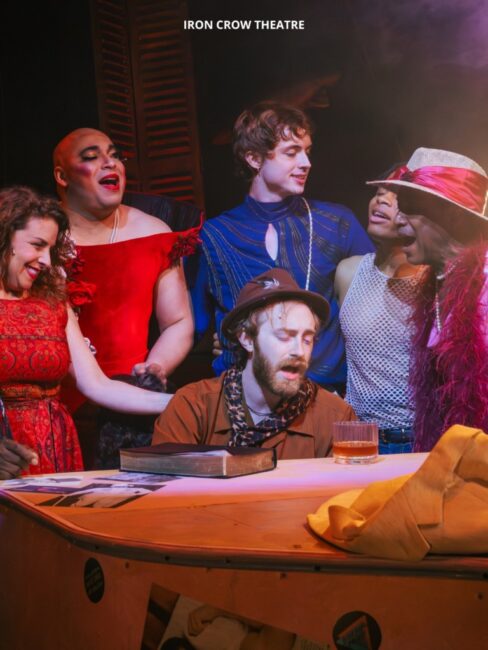
Walking into the theatre space, guests are immediately transported back in time to 1970s New Orleans. Before the show even begins, audience members have the “scene” set for them as they hear 70s music playing, and all of the club members (minus Wes: more on that later) make us feel like we are joining them in the UpStairs Lounge. I always find it enthralling when a theatre sets the scene from the jump, to really put you into the escape and atmospheric world they are building. The lobby was also decorated with signs, photographs, and images from the historic fire tragedy, including explanations on how the fire spread; this, too, was powerful.
Scenic Designer James V. Raymond puts amazing and intentional touches into the UpStairs Lounge set, filled with an amalgamation of both pop and queer culture and references throughout the decades: some items include, but are not limited to: Playboy models, famous drag queens, mannequins sporting fabulous ballroom garb, bar signs, a piano with Marsha P. Johnson and other famous historical figures, event flyers, and window panels riddled with cartoon versions of nude men showing their best poses (and let’s not forget about Nude Burt Reynolds!) Raymond’s scenic design felt intentional, sophisticated, and a bit chaotic all at the same time (which matched the energy of the clubmates nicely). There is even an opportunity for guests to sit onstage to view the performance, which added another layer of depth to the immersive club atmosphere. Also, big thanks to Prop Designer Soph Riscigno for the many bottles, glasses, cups, rags, plates, boomboxes, curtains, fabrics, and anything else that was thrown into the mix to build the club atmosphere (and we hope not too much damage was done when some glasses sounded like they shattered).
Lighting Designer Thomas P. Gardner does fantastic work with the choices made to put focus on many at the club. There are some cool moments during a police activity scene where some red and blue flashing is used but not in an overpowering manner, flickers of light on the ceiling to emulate stars (namely during the song “Waltz,”) and chilling moments towards the end of the show with Kobe Morrison’s character, Patrick. The neutral setting for the bar was well-lit overall so that audience members could see every corner of the lounge.
Major shoutout to Costume Designer Xorlali Plange for the looks of the show because YES! Every character’s outfit really embodied their personalities and struggles, and told a story in and of itself, particularly Timoth David Copney’s Willie (still thinking about that low-cut pink blouse and fabulous hat to compliment!) What is great about the costuming done by Plange is it doesn’t feel too forced to be from the 1970s but still feels fresh (which makes a lot of sense considering the time jumping that happens within the show). There is a moment in the production where an everyday object is the inspiration for an outfit, and it is very exciting and creative. And oh my goodness, those outfits at the end?! YES MA’AM!!
There are several moments in The View Upstairs where characters are intimate with one another, in proximity, touching, kissing, or fighting, and these elements are handled extremely well by Intimacy Director Shawna Potter and Fight Director Mallory Shear. While there is only one major fight in the production, it is EXPLOSIVE enough that Shear’s work and attention to choreographic, detailed combat is essential. The few moments of intimacy in this production feel natural and lovely, and while not a heavy intimacy show like Spring Awakening, it was wonderful to see this coordination, along with the numerous other members involved on the team.
One thing that was interesting (not really good or bad) about this show is the lack of dancing/choreography, but that did not stop the creative team from finding opportunities for actors to slam chairs down to the beat of the music, interpretively move to an ethereal dream sequence, move into tight formations, or crowd around the piano to jam out with friends. The show is not a dancing show, but I appreciate the movement they provided.
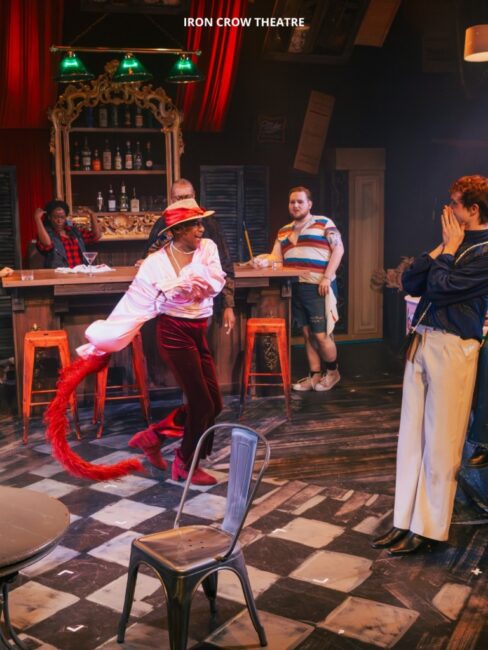
There were some elements when it came to the music and book that personally confused me (mainly to do with lines or lyrics that felt like they were trying too hard or took away from the power of the story), but Music Director Michelle Henning (also doubling as Keys 1), combined with the work of Sound Designer/A1 Zach Sexton, bring the heart and soul (and jazz and blues) to The View Upstairs. Michelle Henning as Music Director guides Jamie Williams (Guitar I), Jefferson Hirshman (Guitar II), Jared Davis (Bass), and Brett Schatz (Drums) through the score of this show nicely, and there are some great moments where the characters lock into their harmonies. (Note: Jason Seller is the Guitar II performer for May 30 and June 12). Obviously, there is no control over the libretto and script of the show. I found the musicians to be a bit loud at times, almost to where some soft-spoken lines or lyrics from characters were missed, but the overall sound they produced was cohesive, fun, and impressive. The vocal prowess of the performers, and their storytelling through hard-hitting songs (namely “The World Outside These Walls,” “The Most Important Thing,” and “Theme Song,”) made up for moments where I personally found some lyrics a bit on the ‘cringey’ side.
The UpStairs Lounge is held together by eight regular patrons (nine if you count Freddy’s mother who visits occasionally), and each one has a story to tell, struggles to endure, and layers of their own to peel back and explore. We will call them the “Upstairs Crew.” One suggestion I would make is that it would be good for the actors’ pronouns to be included in their section of the program. The creative team’s pronouns are included on the website, but I know it is important to use everyone’s proper pronouns whenever possible.
David Forrer (Realtor/Cop) does a great job in the supporting roles played, particularly with the cop role. While there is not necessarily a “villain” in the show per se, you can consider societal pressures, toxic masculinity, prejudice, and ridicule the villains, and Forrer’s cop character embodies all those characteristics.
Timoth David Copney (Willie) is the “old wise man” of the “Upstairs Crew” and shares about his personal experiences through his many stories. Sometimes, he forgets what is supposed to happen in the story, but the others remind him that it is a story he has told tenfold, to get him back on track. Willie is fabulous, spunky, and takes no sh** from others, and Copney has some impressive upper-register vocal moments in “Abide with Me” and “Theme Song.” There is a fantastic New Orleans, Southern accent utilized.
Richard, played by Nicholas Miles, is the “voice of reason” of the “Upstairs Crew,” and spreads the Holy Word as often as possible, to encourage those who are lost to hold onto hope. While Richard does not have too many shining moments, you can tell the group looks to him for guidance (and sometimes just opportunities to sing some hymns).
Dale, played by Geraden Ward, is the “outcast” of the “Upstairs Crew.” Ward’s portrayal of Dale was well-approached and very intense at times. You can tell early on in the show that Dale’s character is on the verge of a mental breakdown, and all of this comes to a head during “Better than Silence,” accompanied with some great enraging moments of singing anger. If I would make one suggestion, I would say that Dale’s character’s anger should build more over the course of the show, and naturally progress. At times, it felt like Dale was going from 0 to 60 then back to 10, which was a bit jarring. Knowing he was misunderstood and unseen by the group though, this could have been a choice made by the actor. (Dale’s character also emphasizes to us the importance of taking care of yourself and seeking help when you are feeling alone), and for that we are grateful.
Asia-Ligé Arnold stars as the lesbian bar owner, Henri, and boy does she pack a punch! From the moment you are introduced to Henri, it is difficult not to fall in love with her grit, ambition, and determination for keeping the UpStairs Lounge afloat. Arnold delivers some intense, sweet, and abrasive moments in the show, sometimes simultaneously. Listen for her clever one-liners that she spews from behind the bar, because they are hilarious. Arnold also has vocal chops for days, when she is doing a riff-off with Willie during “Abide with Me,” and then again when she has a shining moment in “The World Outside These Walls.” Her voice is powerful, healthy, and will give you chills.
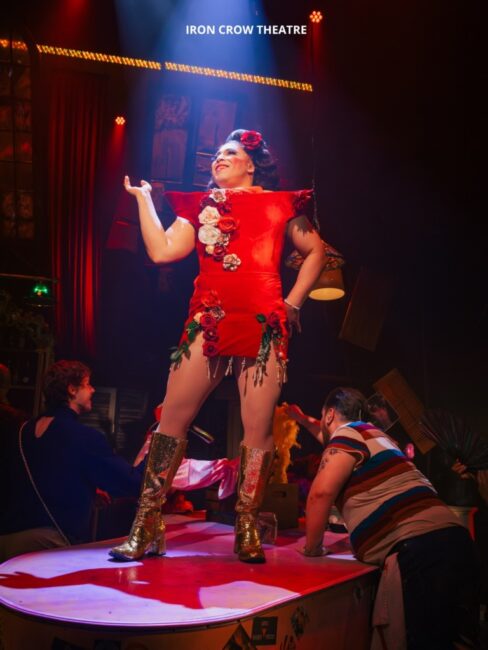
Freddy, the lounge’s Latinx drag queen (labeled as a cross-dresser during the time of the 1970s though we know that is a derogatory and outdated term now), is portrayed by Christopher Alexey Diaz. Diaz’ character Freddy has some tender moments with his mother, Inez, played by Santina Maiolatesi, and their relationship is über special. We do not see a lot from Inez until later in the show, but Maiolatesi has incredible stage presence and the maternal instincts down, as she does what’s best for her son, who struggles to be “different.” Freddy also has an iconic moment during “Sex on Legs” that will have you gagged.
Playing Buddy, the “piano man” of the “Upstairs Crew” is Xander Conte. Conte’s character, I would argue, experiences the most “identity crisis” in the sense that Buddy lives a life of lies (that is, he is married to a woman and has kids back at home, but at the UpStairs Lounge, is a flamboyant, happy-go-lucky queer man). Buddy brings the tunes (and the vibes) to the UpStairs Lounge, and your heart breaks for him during the explosive moment between him and Dale. Conte’s singing is excellent, and he really embodies a piano man, as he sits (or sometimes stands) and plays the keys. He has amazing chemistry with the others on stage too, and is particularly captivating during the pre-show interactions.
The love interest, voice of hope and optimism, and a bit of naivete, is Patrick, portrayed by Kobe Morrison. It took me a little while to realize what Patrick’s character was for, more than just a love interest for main character (and time traveler), Wes, but after further contemplation, realize Patrick is the young, hopeful individual that wanted his story to be told, and wanted someone to remember him for his kindness. While Patrick was not my favorite character (I think that accolade is a toss-up between Inez and Henri), it was neat to see such young representation of queer folks. (At the time of the fire, he was only in his 20s). Patrick did a fair share of hustling to get by, but his heart was in the right place, and he has some beautiful vocal moments telling his story in “Waltz.”
Stop the presses! We have an influencer among us! Wes, portrayed by the fabulous Joey Schuman, is the character who is not part of the original “Upstairs Crew.” After watching this show, I realize much of what occurs is up to interpretation, but Wes’ character finds himself jumping in a time machine (not literally because that would be silly) and heading back to 1970s New Orleans, to learn from the members of the club. What is neat is this element of the show is not explained, so the audience can have their own take on it. Wes is greeted by the (spirits?) of the UpStairs Lounge club members, and he learns so much about himself on the journey. Wes’ character probably has the most “cringey” lines and lyrics in his songs, if I am being honest, but I do think it is to encapsulate the stark contrast between modern day New York and the 1970s Louisiana. Schuman’s mannerisms, facial expressions, interactions with the audience, and overall presence are impressive and really bring more lighthearted feelings to what could be a darker show. For me, it sounded like Schuman’s singing was strained or unsupported at times, but I am wondering if this was a character choice for Wes to sound distinctively different from the other club members. Either way, the modern perspective from Wes’ character was cool, and there are some sweet moments of intimacy between him and Patrick.
There is a great story to be told with The View UpStairs, and while it may be heartbreaking, it gives members of the LGBTQ+ that sense of belonging, community, and love we all seek. I would be remiss if I didn’t mention the content of the piece, as well as the language. Like anything that is real or raw, there comes a content warning. Please be advised and use viewer discretion for this show. as there is a plethora of profane and derogatory language (I think every curse word/offensive word out there is used at some point), references to murder/death, suicide, self-harm, etc. However, know that this adds to the story and the brevity of the time and setting.
As Producing Artistic Director Sean Elias states in his letter, it is important to remember how much “queer lives matter, how much “queer history matters,” and how “queer joy matters most of all.”
Running Time: Approximately 1 hour and 45 minutes with no intermission
The View Upstairs plays through June 14, 2026 at Iron Crow Theatre on the Baltimore Theatre Project stage – 45 W Preston Street, Baltimore, MD 21201. Tickets can be purchased at the door, by calling the box office at 443-637-CROW (2769) or in advance online.