
author: Steven Kirkpatrick & Charles Boyington
Hell’s Kitchen: A Familiar Story Elevated by Two Extraordinary Women (4 stars out of 5)
The touring production of Alicia Keys’ musical finds its emotional resonance not so much in its predictable coming-of-age story as in the powerhouse performances of Emily Kristen Morris and Roz White.
“She’s just a girl, and she’s on fire.” That’s the message we receive in the touring production of Alicia Keys’ Hell’s Kitchen, a Broadway jukebox musical featuring music and lyrics by the Grammy Award-winning singer/songwriter/pianist, a book by Kristoffer Diaz, and musical arrangements by Keys and Adam Blackstone.
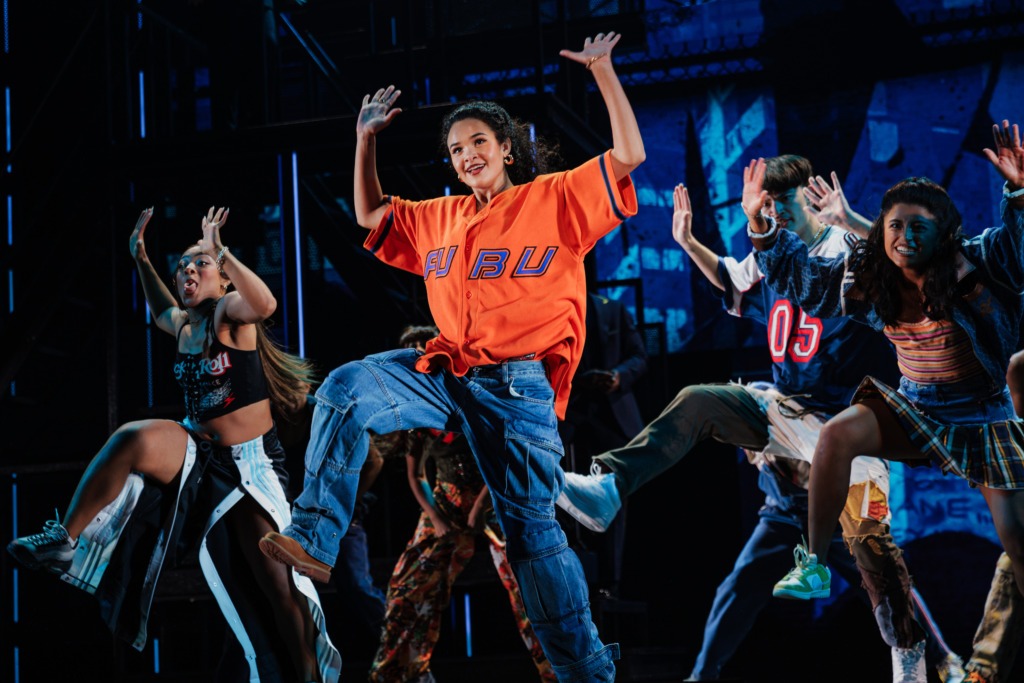
While I lamented the announcement of yet another biographical musical set to music from an artist’s discography, Hell’s Kitchen will likely please fans of Key’s music. In addition to the inevitable chart-toppers (“Girl on Fire” and “Empire State of Mind”), Keys has written original music and lyrics for the production, largely liberating the musical from the tired exercise of cramming an artist’s entire catalogue into a single evening of theater.
Wisely, the musical also resists the temptation to chronicle Keys’ entire career, focusing instead on 17-year-old Ali (Maya Drake) as she navigates first love, family conflict, the desire for independence, and the discovery of the transformative power of music.
Unfortunately, in narrowing its focus, Hell’s Kitchen settles for an all-too-familiar narrative. The rebellious teenager, the overprotective mother, the questionable romantic interest, and the inspirational mentor are recognizable components of the coming-of-age formula. Diaz’s book offers few surprises, and Michael Greif’s direction rarely allows the proceedings to linger long enough to establish the emotional depth of individual characters. Too often, songs seem shoehorned into plot devices and plot devices engineered to accommodate songs.
Fortunately, two extraordinary women provide the emotional complexity that the book frequently lacks: Emily Kristen Morris as Ali’s mother, Jersey, and Roz White as her musical mentor, Miss Liza Jane.
One of the most powerful moments of the evening arrives at the conclusion of Act I, with White’s intense and sublimely moving delivery of “Perfect Way to Die.” Her regal and powerhouse number finally provides an emotional focus to the production, introducing a gravity and depth that transcend Ali’s adolescent frustrations.
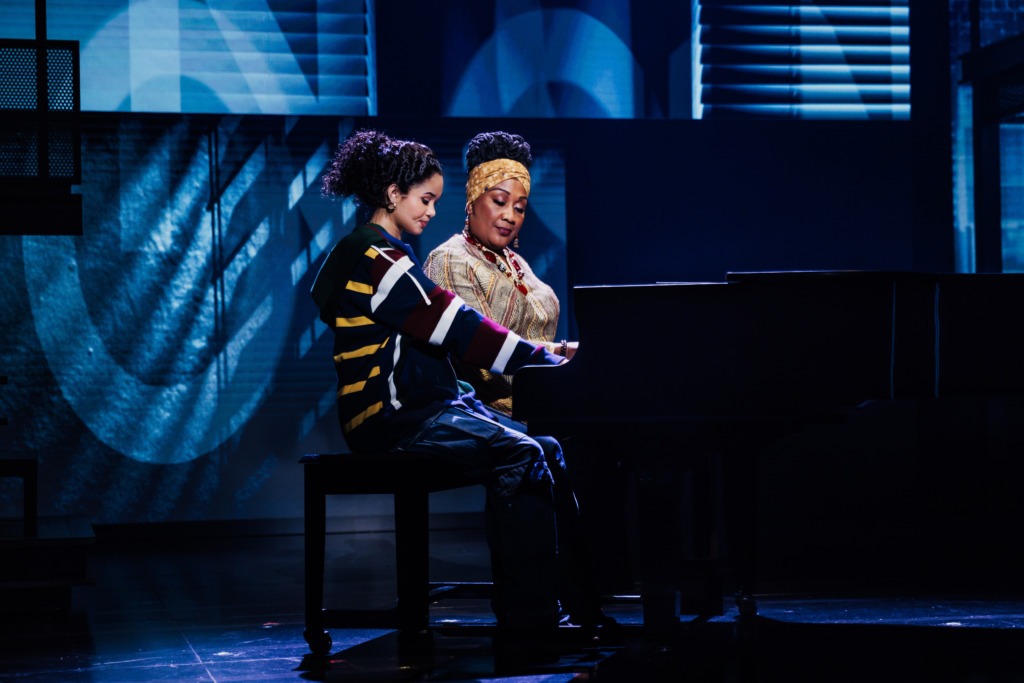
Roze White’s performance allows Miss Liza Jane to emerge as a vividly realized character with a complete existence beyond Ali’s story. Her very presence, her diction, the intention behind every word and every movement stands in astonishing contrast to Ali’s constantly-in-motion, chattering, rebellious energy. White’s first speech, brief as it was, was so distinct, so powerful, so filled with experience and command that it inevitably brought exit applause. When Miss Liza Jane insists that Ali acknowledge her anger and fear and channel them into her music, it makes for a far richer portrait of artistic awakening than the show’s broad strokes of teenage rebellion. The libretto gets one thing very right in allowing this character to shine.
It is also savvy is in granting several of Keys’ most iconic songs to Jersey, cementing the musical’s intention as a love letter to her mother. Morris, as the former party girl turned fiercely protective parent, brings welcome dimension to a character who could easily have become little more than an obstacle to her daughter’s independence.
And when Morris launches into “Pawn It All” in Act II, all bets are off.
The room goes silent as Morris pours her heart, soul, passion, and rage onto the stage. Her impressive vocal technique, breath support, and control are matched by the emotional conviction of her performance. It is a thrilling piece of musical theater, earning a well-deserved standing ovation from some members of the audience. In Morris’ hands, Jersey becomes a woman whose own sacrifices, disappointments, and aspirations inform the ferocity of her love.
This is not to diminish the considerable talents of Maya Drake. As the production’s narrator, Drake frequently breaks the fourth wall, introducing us to her neighborhood of artists and musicians without burdening the proceedings with lengthy exposition. Yet it is in the slower moments of this breakneck-paced musical that Drake is most enjoyable. Her renditions of “The River” and “Kaleidoscope” allow audiences a welcome opportunity to appreciate her impressive voice and technical range as the music ebbs, flows, and swells.
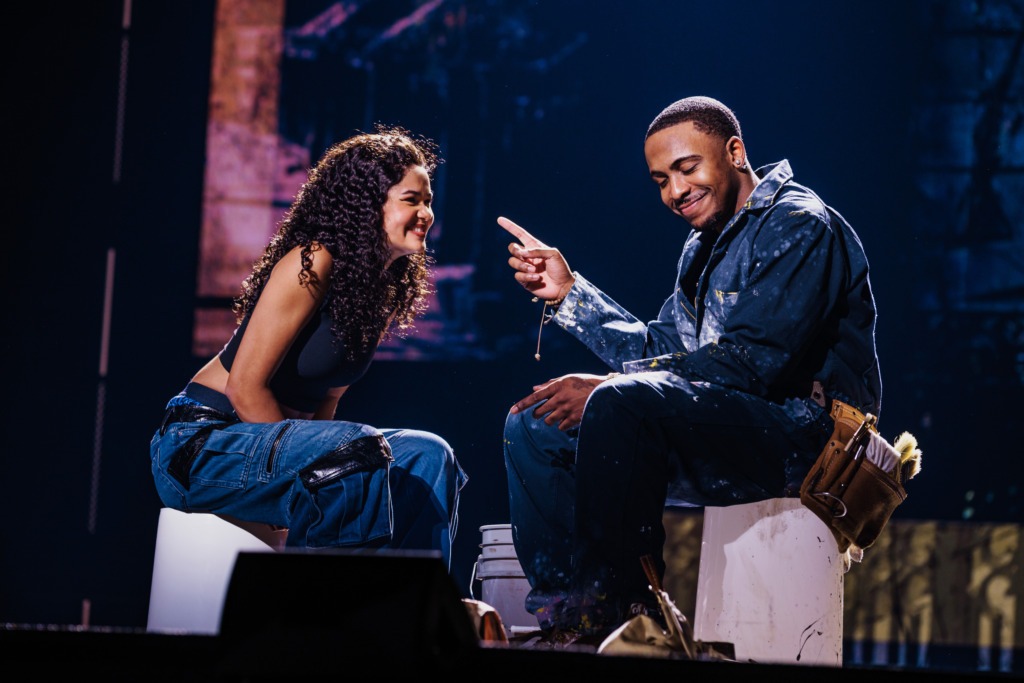
The male performers certainly hold their own, particularly JonAvery Worrell as Ali’s romantic interest, Knuck, and Desmond Sean Ellington as her father, Davis. Both are accomplished vocalists. But it is the gritty, loving, hopeful, and occasionally heartbreaking relationships between the female characters that give the production its emotional power.
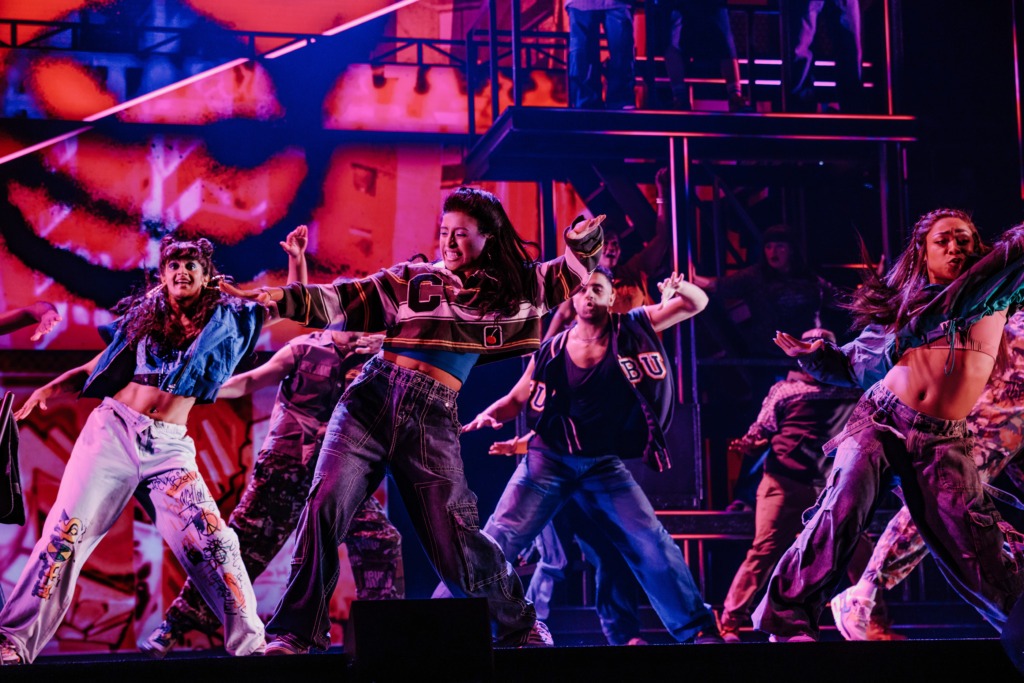
The production values, though energetic, can feel somewhat one-note. Natasha Katz’s flashy lighting loses some of its impact through repetition, as does Camille A. Brown’s technically demanding choreography. If there is a dance routine underway and the grand piano happens to be onstage, there is a good chance someone will be dancing atop it.
There are intriguing moments when the choreography ventures into more interpretive movement, allowing the dancers to explore the emotional textures of Keys’ music. The ensemble deserves more of this variety. Recognition goes to ’Zaiah Ellis and Christopher Miller in “Unthinkable,” Destini Hendricks and Jerimy Rivera in “Work On It,” and Marques Furr in “Hallelujah”—five sensational performers breathing exquisite movement-based life into the production.
The ensemble also brings tremendous vitality to the highly anticipated “Girl on Fire,” knocked out of the park by Marley Soleil as Ali’s friend Jessica, and, of course, “Empire State of Mind.” Combined with Dede Ayite’s visually captivating costumes, Robert Brill’s scenic design, Peter Nigrini’s projections, and Gareth Owen’s sound design, these numbers offer some of the production’s most vivid glimpses of the New York City it seeks to celebrate.
Ultimately, Hell’s Kitchen is an entertaining, musically accomplished production with a richer, more emotionally complex musical lurking beneath its predictable coming-of-age story—one about mothers and daughters, mentors and students, and the women whose sacrifices, wisdom, and experiences help shape the next generation.
In Emily Kristen Morris and Roz White, we catch exhilarating glimpses of that musical. You may enter the theater anticipating a celebration of Alicia Keys and her music, but it is these two remarkable women who make the evening worthwhile.
Running Time: Approximately 2 hours and 35 minutes with one intermission
Hell’s Kitchen plays through December 6th 2026 with Broadway at The National— 1321 Pennsylvania Ave NW, Washington, DC 20004. For tickets call the box office at (202) 628-6161 or purchase them online.
The production contains strong language and adult themes and is not recommended for audiences under 16.