You must always get your hopes up— it’s wise but scary— though not in this case! If you’re getting your hopes up for a fantastic evening of theatrical entertainment, then you’re winning at life and Everyman Theatre is the place to be! They will delight you, they will tickle your funny bone, they will enchant you with their penultimate production of the 25/26 season (celebrating 35 years in Baltimore), and they will remind you that life is beautiful, worth being hopeful over, and certainly worth living. Debuting as the swan-song directorial piece of Founding Artistic Director Vincent M. Lancisi, Christopher Durang’s Vanya and Sonia and Masha and Spike is a glimmering theatrical gem of nuanced comedy, heartfelt family struggles, and a little bit of theatrical absurdism for the modern day audiences. Lancisi, the cast of six, and the production team pull out all the stops and it’s a radiant and charming little piece of theatre.
If long airport lines and crazy overpriced theme park tickets weren’t in your 2026 calendar budget, Scenic designer Dan Conway has got you covered as he brings you the visually stunning magic of a certain ‘happiest place on earth’ (at the very least, the idyllically verdant cottage-core vibes thereof) right to the center of the stage. Conway’s set is magnificent, a truly towering testament to his creativity, his ingenuity, his sense of sparkling whimsy, and his overall understanding of how to make a set strikingly beautiful and fun whilst flawlessly integrating it into the work. Too often you find a set that’s as breathtaking as this one that then overpowers the play-space or becomes more enticing than the actors and the actions happening on stage (of course, it helps that you’ve got some of Charm City’s absolute finest performers comprising this particular sextet of characters in this instance) but Conway has crafted this extraordinary set and balanced it perfectly against the superb talent, delirious writing, and overall experience of the performance. It’s Conway’s attention to detail that really brings this masterpiece of scenery to life— the little stained glass color-cubes nested into the front door, the scalloped terra-cotta-looking tiling on the roof, the wooden structural eves of the interior; it’s all miraculous and creates this really awe-inspiring aesthetic. Of course part of the set’s charm is Douglas Johnson’s forestry. (When you see the set, you’ll understand.) Again the attention to detail in this greenery is exquisite; Johnson’s knowledge of fabricating faux flora fits fantastically into Conway’s vision as a whole and it serves as the decadent decorative icing on a pretty stunning set.
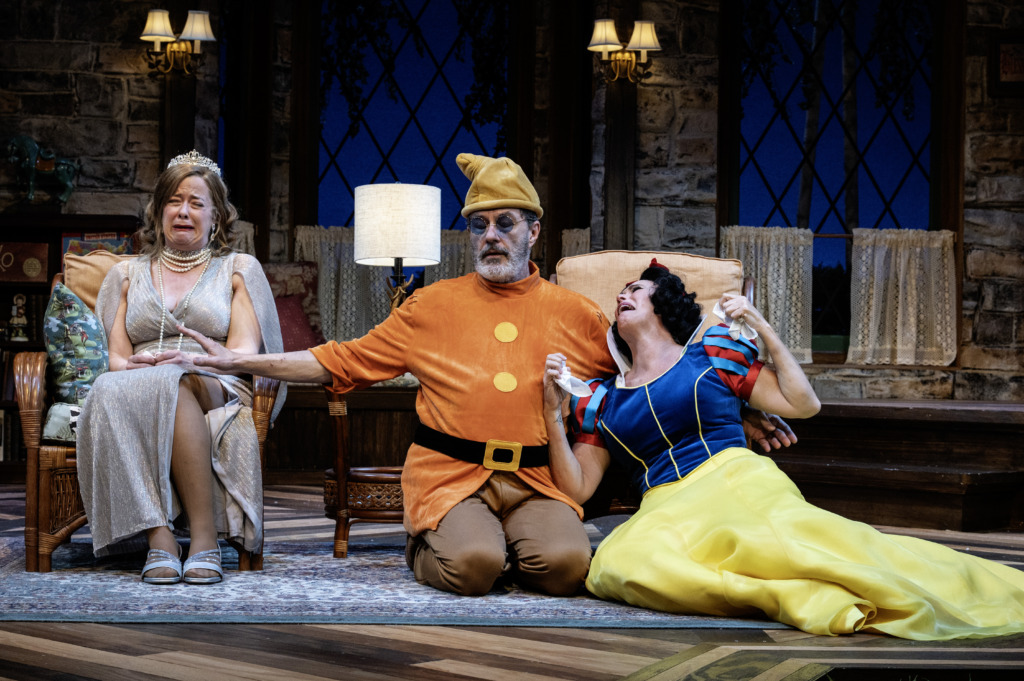
Accenting Conway’s scenic brilliance, Costume Designer David Burdick is hitting all the notes. While the ‘Snow White’ costume is clearly outlined in the script (alongside two dwarves) Burdick nails the detailing in these— and every other costume— resplendently. (Shoutout to Wardrobe Crew Lanoree Blake assisting with some of those quick-changes off-stage!) Those too-bright color schemes that get featured on Spike are perfect for augmented the loudness of his lack-of-personality (and there’s a little bit of irony in how brightly saturated his costume pieces are, considering how little time the character spends in them!) Burdick draws all the focus to the lavish and outlandishly tasteful costume pieces featured on Masha, which further separates her posh and over-the-top caricature of an aging Hollywood B-lister from her more simplistic, lifeless siblings. That flamingo-feathered affair featured late in the second act is a personal favorite, along with the candy-stripe stiletto slingbacks that give the character that elevated air of self-importance. And props to Wig Designer Denise O’Brien for crafting the perfect locks for the Masha character (including that meticulously styled Snow White wig!) It’s a sumptuous visual feast that just engages the audience at the highest caliber.
Of course, it would be remiss to wax on about the brilliance of the show’s aesthetic without mentioning Lighting Designer Harold F. Burgess II. While his illumination tactics aren’t on the grand sweeping tier of Conway’s set they are just as intricately plotted and deeply appreciated— for both their beauty and their subtlety. Burgess’ lighting work is witnessed primarily in the background— he literally sets the hints of backing scrim ablaze with colors— be it subdued blues and purples for the coming night, or warmer amber and orange tones at sunrise or those pinky-purples for sunset. It adds this delectable component of verisimilitude to the scenery and scenes as a whole; you really feel like you’re watching the exterior bits that surround this house at various times of the day. It’s a remarkable marvel to achieve and its done so simply and to great effect. And while Pornchanok Kanchanabanca’s can’t be categorized into the show’s aesthetic achievements, it’s that wending thread that helps pull the show together into one extraordinary experience. The birds that call, the little hints of otherworldly sound-scape that accompany Cassandra’s ‘visions’, the sound effects of the car, it all ties together into one perfect package. And the pre-show and intermission playlists are pretty wild (pop-dance tunes to give you the idea that we’re settling in for a zany ride circa 2012.)
Director Vincent M. Lancisi has put a signature stamp of earnest, engaging performances onto this production alongside his perfect pacing, extraordinary equilibrium of humors and severity, madcap moments and weighted sincerity; it’s a perfectly developed, wholly enchanting, quaintly charming piece of comedy with heart. The pacing is sublime with a natural ebb and flow from one minute to the next. There’s a steady current that drags along beneath the scenes, balancing those faster, frenetic moments of comedy, with the deeper (fewer and far-between) moments of sincerity; Lancisi has a magic touch in letting these moments breathe fully, whether they be high-humor or heartfelt conversations, with an emphasis on leaning into the comedy but also not shying away from those little nuggets of pathos as they tumble into the plot. Lancisi also cultivates these gorgeous, natural dynamics between the characters; the authenticity that sizzles and pops (with a bonus shoutout to Lewis Shaw, the production’s fight and intimacy director) making each moment not only lively but wholly believable.
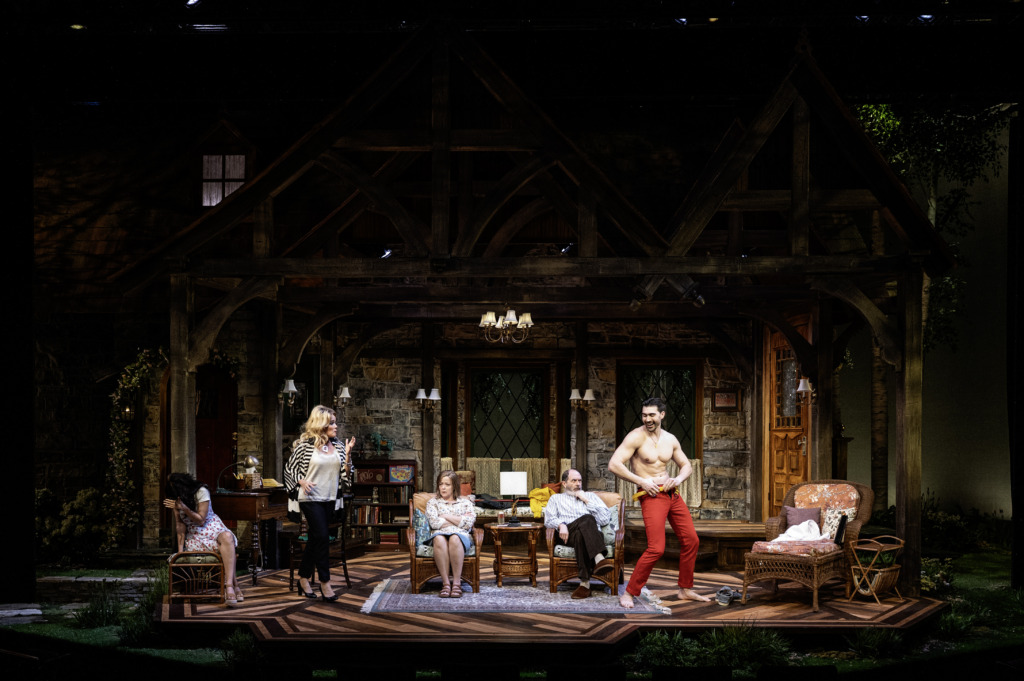
Lancisi has a way about his directorial approach to the show that makes you forget you’re watching a play; he draws you in, like you’re an awkwardly invited guest who’s been asked to attend the lives of these characters, and it’s an incredibly feeling. There’s an ease with which this production flows; you don’t notice the passage of time and are almost a little sad when the play reaches its conclusion (not because it’s happy or sad or some other feeling but merely because your time spent with these whacky creations has come to an end.) The ever-shifting dynamic relationships between the characters is what really hooks the attention; the camaraderie, the new-friend-discovery, the bitterness, the jealousy, the raging moments of insanity, all captured effortlessly by Lancisi’s work with this stunning team of talented actors making for a stupendous and sensational final show for the company’s founding artistic director.
Christopher Durang’s work is notably unhinged in the most humorous way possible, and this play (Tony Award-winning comedy of 2012) is no exception. And the cast that Lancisi has selected to fulfill its robustly humorous requirements are perfection incarnate upon the stage in their respective configurations. While you only have one scene— late in the second act— where all six are featured together— you get this inherent sense of bondedness amongst them that just reads no matter which pairing or grouping of characters are on stage. And while they each live in their own burbling dynamic of character— or in Spike’s case, caricature-stereotype— the way they connect and interact with one another is remarkable and feels wholly authentic and grounded in the whimsical and quirky reality of the play.
Spike (Alex Benoit) is the epitome of a ‘Himbo’ who exists solely in the plot to create hilariously hysterical sexual tension for at least two of the Chekhov-siblings (they’re all related, bearing names of Chekhov’s characters) and Benoit lives up the vapid-life of this stereotype to the max. Spike’s very nature and composition gravitates around his potential to be eye-candy and Benoit delivers with everything from the quick-strips on stage to the pec-flexes and then some. Delving fully into the “beautiful house-lights on-nobody’s home” nature of Spike, Benoit invests his body language, goofy facial expressions and a rigorous shallowness that just screams ‘boy-toy’ from the moment he comes bounding through the front door, through to this final doubled-over prickly exit. The character isn’t written to have depth or meaning and Benoit makes us believe that this caricature of a human exists comfortably in the bliss of his own ignorance.
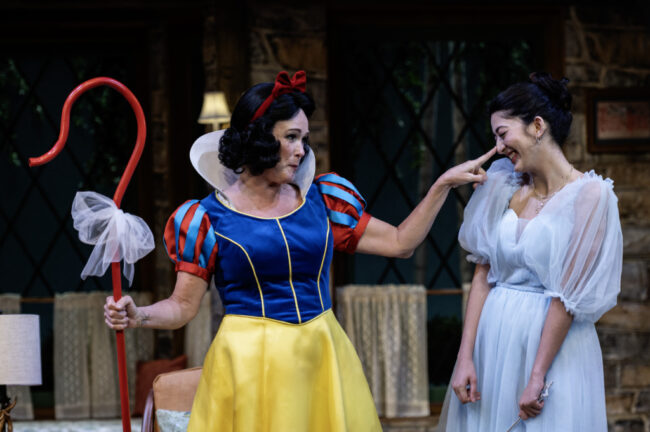
There is a touching charm, almost a counterpoint to the air-headed-eye-candy-ness of Spike, that accompanies Nina (Shubhangi Kuchibhotla) when she drifts like a warm spring breeze into the Chekhovian cottage house. There’s a delicate nuance to the way Kuchibhotla interacts with both her idol, Masha, and her newfound friend, Vanya. Kuchibhotla imbues the character with a sweetness that defies the tendency of such niceties to want to be cloying and saccharine; it feels genuine and authentically simple, though not in the vacant way that Spike’s simple stumbles its way through a room. There’s also a quiet intelligence laced with the kindness that Kuchibhotla shimmies out of Nina, particularly when her portion of Vanya’s play gets interrupted by the ‘postage-stamp’ tirade; it plays out beautifully on her facial features.
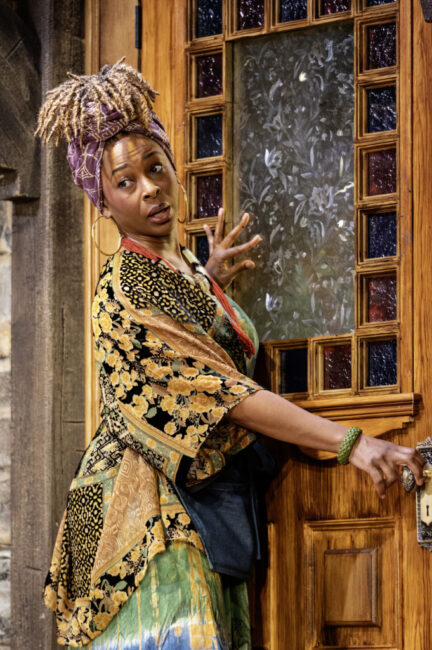
Beware wild turkeys! Beware blue herons! Beware dwarves! None of those things are predictions from Chinai Routté’s Cassandra but she is fierce, fiery, and wildly entertaining to watch whether she’s making outlandish predictions or simply engaging with the other characters in the play. When she kicks off her solo scene in the second act— trying to chase out all the bad juju and dancing through the space— you feel connected to whatever brand of spiritualism she’s allowing the character to wholly impart into the room. Routté has an exacting sense of comedic timing and delivery, particularly when her character is making a snarky or sarcastic point.
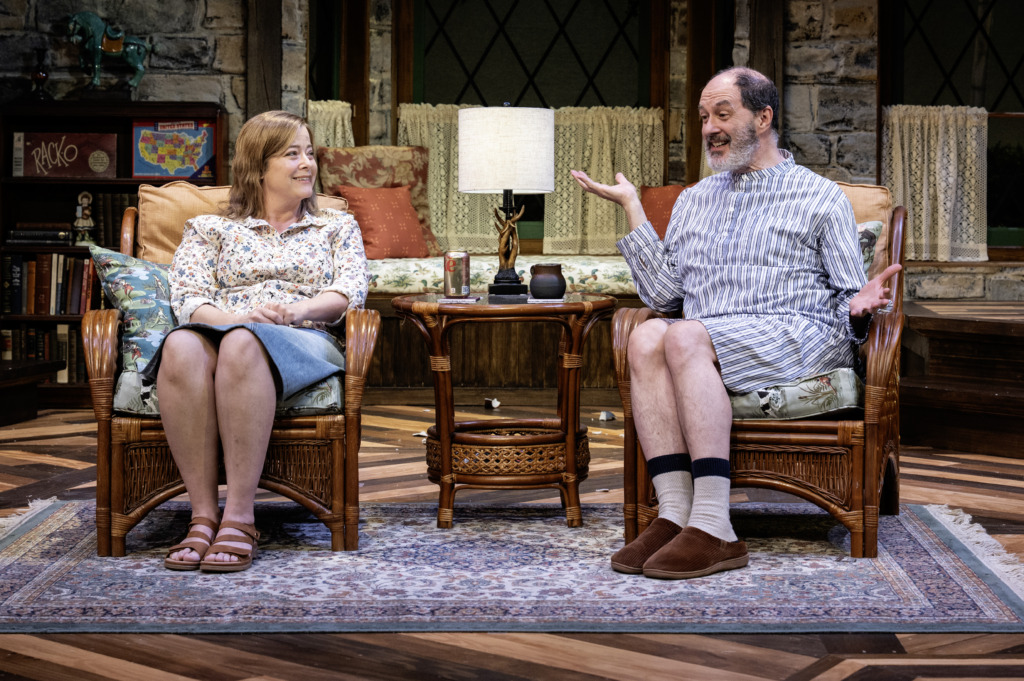
The most transformative character in this production is Megan Anderson’s Sonia. Wilted and woebegone, the audience is treated to an earnest delight watching her progress from this dreary little spineless moping muppet into something the kids might describe as a ‘personality glow-up.’ Anderson handles the arch-of-growth divinely and with seasoned expertise; it feels like it’s occurring over a natural spread of time (rather than the cross-sectional of time that’s written into the script.) Her facial expressions are mesmerizing, particularly when she’s experiencing bouts of doubt and depression. And her generalized engagements with Vanya are prickly with that peculiar sense of humor; you can’t help but laugh. When Anderson’s character finally arrives at her own— that one scene where she and Beth Hylton’s Masha go to verbal blows— it’s epic and evocatively entertaining.
Channeling some wild and fabulous hybrid of Joan Rivers, Susan Lucci, and the fictious Norma Desmond, Beth Hylton is bringing this over-the-top narcissistic aging B-grade Hollywood sellout character of Masha to vivacious life, nailing every single stereotype with a verisimilitude that has the audience in stitches. With a personality-archetype like Masha, it’s too easy to fall for the campy-schmacty presentation that lends itself to this character. Hylton gives you all of those panicked-age-faded celebrity blowouts but plays them on a level of reality that enhances the humor rather than shoves it in our faces. And when she and Anderson are having their cry-fest on the floor it’s both hilarious and heartfelt (and poor, poor Vanya walking into it!) There’s a level of unhinged diva that is perpetually percolating— sometimes behind the veneer of a vicious smile and sometimes bursting outright through Hylton’s mouth— with her portrayal and it just grounds the play and her place in it in this absurdly beautiful reality. Her interactions with everyone just punch the audience in exactly the right fashion to earn those laughs and it’s epic.
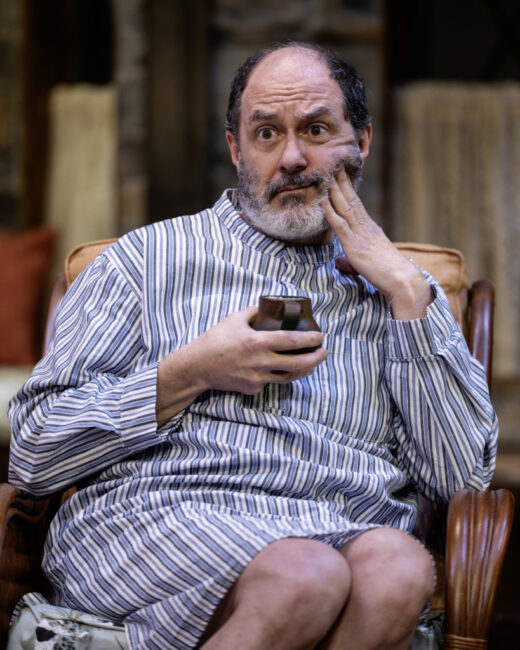
You could easily watch Bruce Randolph Nelson read a phone book (not that many of the younger audiences would know what that is) though as Vanya you’re going to watch him have the most becalmed and simultaneously feral rant about licking postage stamps and you’re going love every blessed minute of it because the man is that captivating. With body language and facial expressions that are unmatched in both their animations and their ability to hook the audience, Nelson’s Vanya is who you’re watching regardless of who’s driving the scene. This is particularly true when Sonia has her little smashable outburst early on and literally any time Spike appears in the house. Nelson does an exquisite job of finding all the nooks and crannies of Vanya’s personality, exploring them thoroughly, and releasing them into the theatrical ether— either with his expressions or his outbursts. With the cry-fest between Masha and Sonia it’s a brilliant blend of both, though his shining glory moment is the postage stamp rant. There’s a Durang quote along the lines of “…an actor knows how to give an audience what it wants…” and Nelson is living that quote, pulling out all the stops in the postage-stamp scene. There’s a dynamic intensity to it because it’s not just a one-level bombastic tirade, it’s nuanced and rolls like ocean wave after wave pounding you over and over; it’s theatrical brilliance.
There may not be much that’s articulate in the world anymore…but Durang’s comedy, Vincent M. Lancisi’s finale show directed at Everyman Theatre, this brilliant evening of laughter and heartfelt family dysfunction is beyond that— it’s brilliance; it’s like watching a blue heron come to the pond’s edge at sunrise or sunset, and enjoying it with your loved ones. Don’t miss Vanya and Sonia and Masha and Spike this spring; it’s lovely.
Running Time: Approximately 2 hours and 30 minutes with one intermission
Vanya and Sonia and Masha and Spike plays through April 19th 2026 at Everyman Theatre— 315 W. Fayette Street in the Bromo Arts District of Baltimore, MD. For tickets call the box office at (410) 752-2208 or purchase them online.