
Theatricity— the happiness you experience when the electrical nature of live theatre simultaneously tickles your funny bone and gives a hard yank on your heartstrings. The word is mine, the notion gently borrowed from and inspired by the master wordsmith— playwright and Everyman resident company member— Katie Kleiger, author of Different Words for Happiness, presently making its world premiere as the second play of the 2026/2027 season. A properly evocative, emotional roller coaster, this striking tale is packed with ‘Theatricity’; the artfully crafted tension encased within this humorous and heartfelt dramatic comedy makes Different Words for Happiness a stunning ‘must-see’ and is written in such a way that almost guarantees it life in an off-Broadway house in the near future. Directed by Laura Kepley, this gorgeous, high-stakes, real-life experience will glue itself inside your mind’s eye, beat steadily within each chamber of your heart, and cling to both your guts and your ribs with tension-induced anxiety and core-igniting humor in equal measure.
The twisting hook that grabs audiences from the word go is the predictably unpredictability of it all. Katie Kleiger has woven a masterpiece of a journey that hits highs, lows, and everything in-between as it presents its almost prime-time drama-level plot only to have precarious, hairpin turns upend you in a multitude of unexpected emotional surprises. The plot is never a foregone conclusion, even though once the second scene gets underway the notion of a ‘reveal’ steadily festers in the background. I say this in convoluted verbiage so as not to spoil the delight that is the discovery of Kleiger’s work. The tension builds subtly and at times the way Kleiger has structured the character dynamic between Elanor and Ava it all but vanishes from existence, only to reappear suddenly as a scene progresses or a specific dialogue section is exchanged. It’s an exquisite emotional experience as it is never a question of ‘if’ but rather ‘when’ the reveal will happen. It’s quite thrilling, weighted with brilliant anticipation.
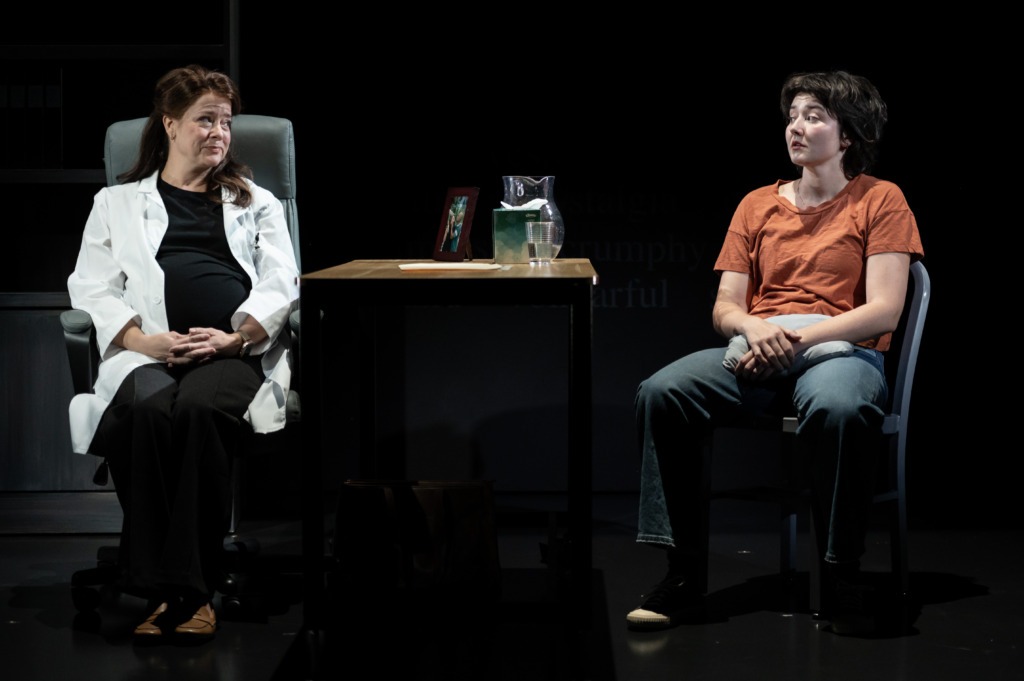
Kleiger’s work is a thrilling blend of dopamine-inducing comedy, heartfelt moments of human connectivity, and the raw reality of relationships be they romantic, platonic, or even that of the self with the universe. It’s brilliant. There’s complexity and nuance crafted meticulously into each moment; the way the beats are structured allows for these glorious explorations of awkward tension which are oft diffused with moments of ripe humor. The connection between Elanor and Ava is not only relatable but authentic at its core. And she hits the nail on the head when it comes to accurately portraying both the extremely awkward dynamic of a gynecologist’s visit and the stigma that surrounds the experience of being a woman. There’s a harrowing and desperately true line in one of those scenes to the tune of “we’re taught to believe that excessive pain and bleeding is just a natural part of being a woman” and that section of dialogue, encapsulated in the overall cradle of the gynecologist-scene work is an excruciatingly accurate portrayal of that experience.
Her control of language, of conversation and dialect is nothing short of a masterclass in playwrighting; it feels so real that you forget you’re watching actors. It lands so genuinely and with such cleverness that you find yourself slipping into the experiences of both women on stage. Her turn of phrase is a true mark of genius (and not the sweaty-spy variety either. #IYKYK) and her ability to fabricate words into existence makes her an extraordinary wordsmith. The way Kleiger constructs this linear voyage between Elanor and Ava, with the lingering canker of the Nathan character festering away in the background is superb, making for an a beautiful trainwrecking experience of live theatre. Kleiger’s work simultaneously addresses the minutia of a very tricky situation between two women who start as strangers with a common factor and the broader strokes of humans connecting with one another during dark and light moments in the lives. And she makes these broad concepts connect phenomenally with the focal points of these two characters, integrated seamlessly with the overall story. It is very much an everywoman story and yet very specifically a story about these two women and the balance between the both is awe-inspiring.
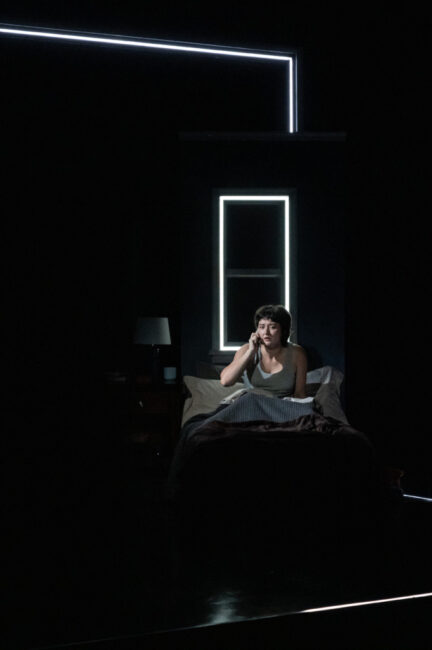
Exceptional writing and creativity by Katie Kleiger is being augmented by Director Laura Kepley, the entirety of the design and run crew on the production, and of course the three performers. Scenically the show flows in a minimalist vein, right up until it doesn’t. Resident Scenic Designer Daniel Ettinger, working in tandem with Lighting Designer Juan M. Jaurez, creates a sense of Illumglee (a newly coined word for the happiness you experience when theatrical lighting does more than just put the actors in view of the audience without creating too much emphasis on itself while doing so.) The pulsing white light bar that serves as an outline and a border for scenic confinement creates the edges of reality for the show’s existence. And the scenery itself, which consists of simple roll-in pieces (shoutout to Stage Manager Jalon Payton, ASM Peri Walker, and Backstage Crew Ace Spencer and Julia Willis), is just enough to inform the scenic switches and passage of time without overloading the stage. It too has a craftiness and a brilliance about it, in a similar fashion to the sartorial selection featured in the show (Costume Designer Kathleen Geldard, whose pregnancy belly featured on one of the characters is exacting in its placement, positioning, and overall display, and wig designer Denise O’Brien, get the nod of praise here.)
Sonically the show exists in reality and in the emotions that are expressed from Elanor and Ava. Sartje Pickett, who is credited as the show’s sound designer and original musical composer, is selective about where sound makes its entrance and allows for natural moments to be without the accompaniment of background effects, except for when it builds the concept of scenic shift, like the burbling of bar noise when the pair find themselves having dinner. And Laura Kepley’s direction is nearly impossible to describe in all of its astonishing excellence without going into great detail about the character’s and their respective reactions and responses to all of the delicious chaos that evolves between them as their narrative grows, twining together on the journey. Kepley allows for those little wiggles and nods of acknowledgement to the audience in a way that doesn’t obliterate the fourth wall, but rather seeps beneath it like a fine mist; it’s the perfect approach to Katie Kleiger’s text. Kepley also has a superb sense of making this space work for the actors in it, particularly when it comes to playing with spatial dynamic between them and how that concept balances itself against the emotions being expressed in various scenes.
I almost feel bad for actor Maboud Ebrahimzadeh, who plays the character of Nathan. Not only because the Nathan character has two brief, though deeply significant, scenic exchanges on stage, but because the character is largely unredeemable in what of him is exposed to the audience. Affairs don’t happen in vacuums and not everyone who engages in cheating is a bad person, but the way Katie Kleiger has constructed the Nathan character makes him ‘that guy’ that we’ve all regrettably dated, or heard stories of our poor friends who have been strung along. And it serves the show exceptionally well. Ebrahimzadeh does a stellar job of attempting to win over both the attentions and affections of the audience as well as Ava in the moments where he’s featured. The jitteriness in his voice, the constant restlessness in his movement, the sense of perpetually being lost in his own life washing out from his words and down into his body; it’s a necessary experience, however unpleasant to behold, and Ebrahimzadeh does so exceptionally well.
Megan Anderson and Em Whitworth are performance sensations in their own right; together they are stupendously engaging, versatile and dynamic, absorbing parts of each other’s character approaches to life. It makes for a truly remarkable theatrical experience with so much heart, heartache, and raw exposure to the ups and downs of life that you just want to marinate in their story a little longer. One moment you’re laughing, you’re gasping in abject bewilderment, you’re sniffling and trying to hold back tears, you’re desperate to want to join them in karaoke. Anderson and Whitworth run the gambit of experiences, emotions, and expressions, and it makes for moving theatre.
As Ava, there is a raw and visceral edginess to Whitworth’s performance. She’s as unrefined and immature as the descriptions of ‘life’s reality vs what we expected’ in the play itself. And her facial expressions are unhinged in the most laugh-inducing fashion imaginable. Particularly in the gynecologist office when she’s trying to ‘quick-stall’ her way around the truth, the way her eyes, eyebrows and overall look of ‘not-at-all-convincing-truth’ gets expressed has the audience in stitches. But there’s a rich depth to Whitworth’s character exploration as well. When the moments are serious, the emotionally gravitational pull is heavy, Whitworth delves in unapologetically and surfaces with unadulterated pathos as her result. And she’s not afraid to go hog-wild with the dancing, which only adds to the incendiary and infectious nature of her character’s humors. She generates this sense of Wanbeam (the type of happiness one experiences when someone on stage is having an experience so joyful you want to be a part of it or become them in that moment!) that juxtaposes divinely against the melancholy and the rage that arises in various situations throughout the course of the performance.
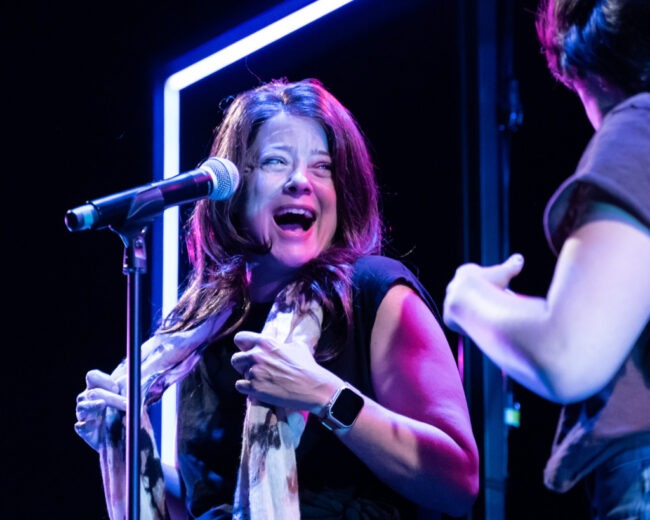
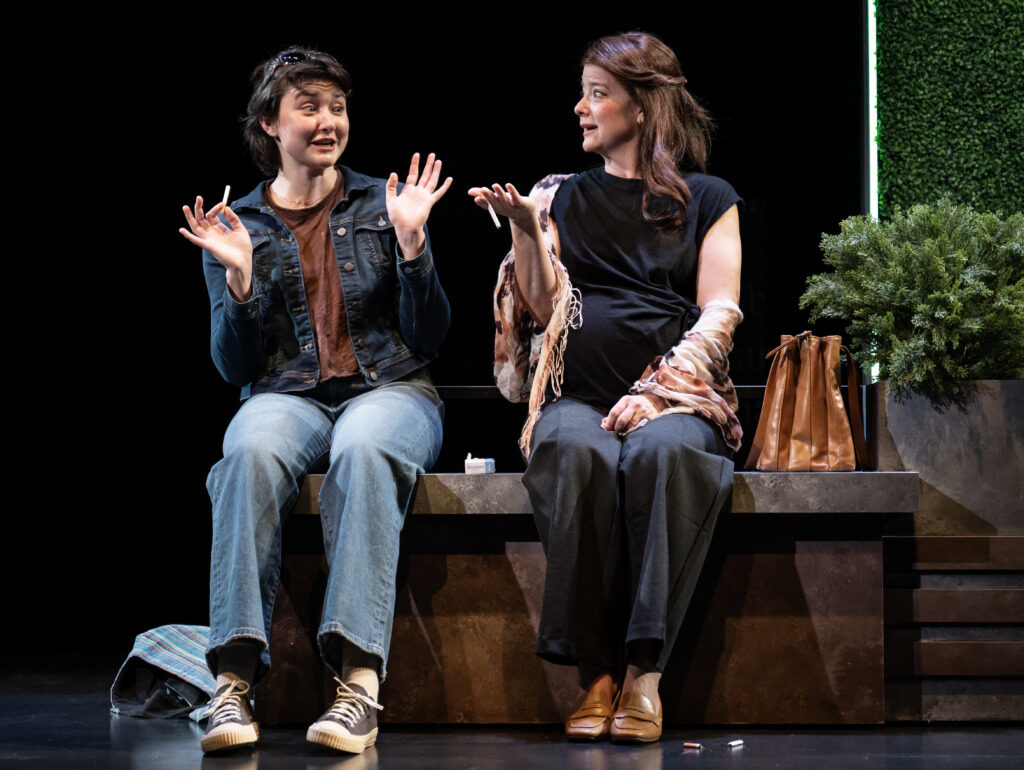
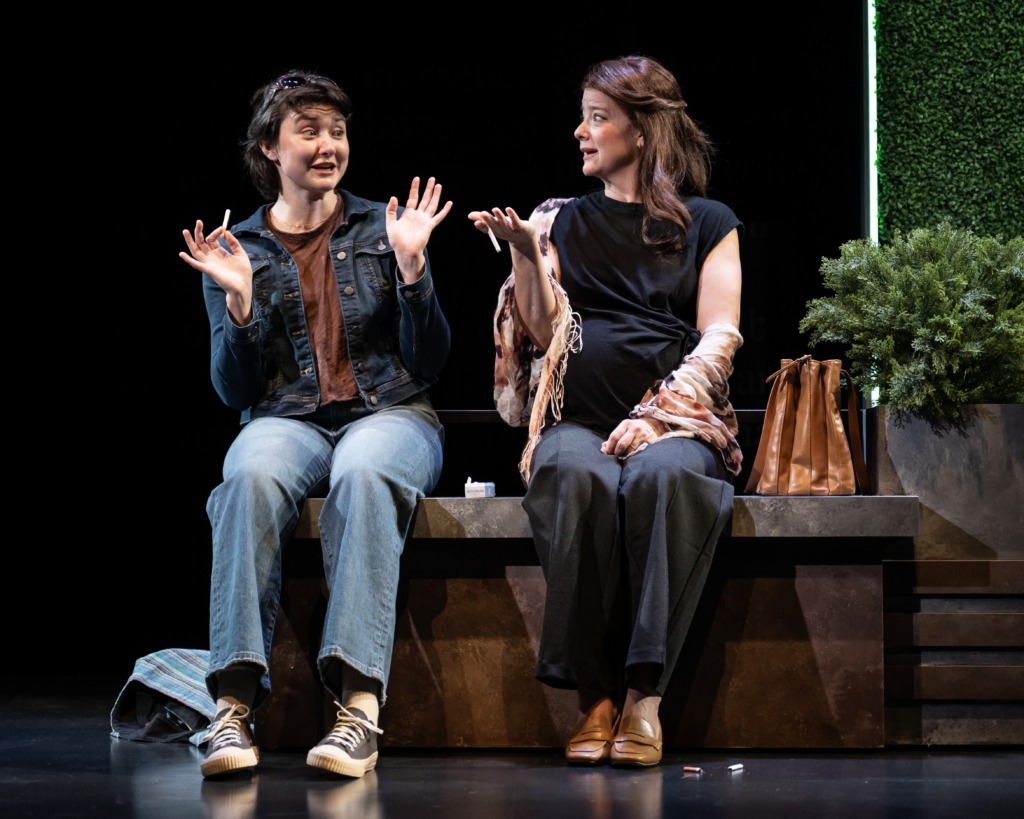
As Elanor, Megan Anderson lets her character unfurl from clinical to deeply invested and you see that both in the relationship dynamic shared with Ava as well as in the approach to her own life. There are visceral moments of confession that gut-punch you with a weighted boxing glove and those are complimented by silly moments, like the beer-guzzle moment and the placebo cigarette instance. That whole scene, shared on that bench outside the medical center is a culmination of theatrical perfection— Kleiger’s writing, Kepley’s direction, and the way Anderson and Whitworth feed into and off of each other for that exchange— it’s one of the best moments in the show. It’s irreverent and yet fully present with itself, a success achieved throughout the performance by all parties involved, as even Kleiger’s more irreverent moments in her writing have a reverences and a profundity to them. Anderson’s character of Elanor gets quite a few of those moments and the entire break-neck explosion in that final scene showcases her versatility as a performer and her ability to flip-switch emotions, actions, and reactions in the blink of an eye with exacting precision.
There aren’t enough good words for the stunning, wholly moving, fully hilarious, and utterly evocative experience that is Different Words for Happiness. Maybe a new word— Joyage: the happiness experienced when a brand-new word premiere work of theatre wrecks in such a beautiful way with its frontal assault of humor and heartache, hilarity and harrowing moments that you can only feel the happiness that you get to witness it and experience it first-hand. Go for the Joyage and the Theatricity; it’s an experience well worth living through and has such powerful messages wrapped up inside of it, not the least of which how we can choose happiness in our life, even when that seems impossible.
Running Time: Approximately 100 minutes with no intermission
Different Words For Happiness plays through November 15th 2026 at Everyman Theatre— 315 W. Fayette Street in the Bromo Arts District of Baltimore, MD. For tickets call the box office at (410) 752-2208 or purchase them online.