
“Life can still be good; better than death.” The quote may presently come from Stephen Spotswood’s Where Dead Women Go to Dance, but there’s a ubiquity and a universality to its truth. No matter what you’re facing, no matter what you’re going through, life can still be good; better than death. It’s a powerful notion that gets driven home in this new work, appearing under the direction of Lauren Patton Villegas at Theatre Prometheus. While the play is heavy and emotionally loaded it is not without its humor and its heart, though has a lot of potential for growth in it current format.
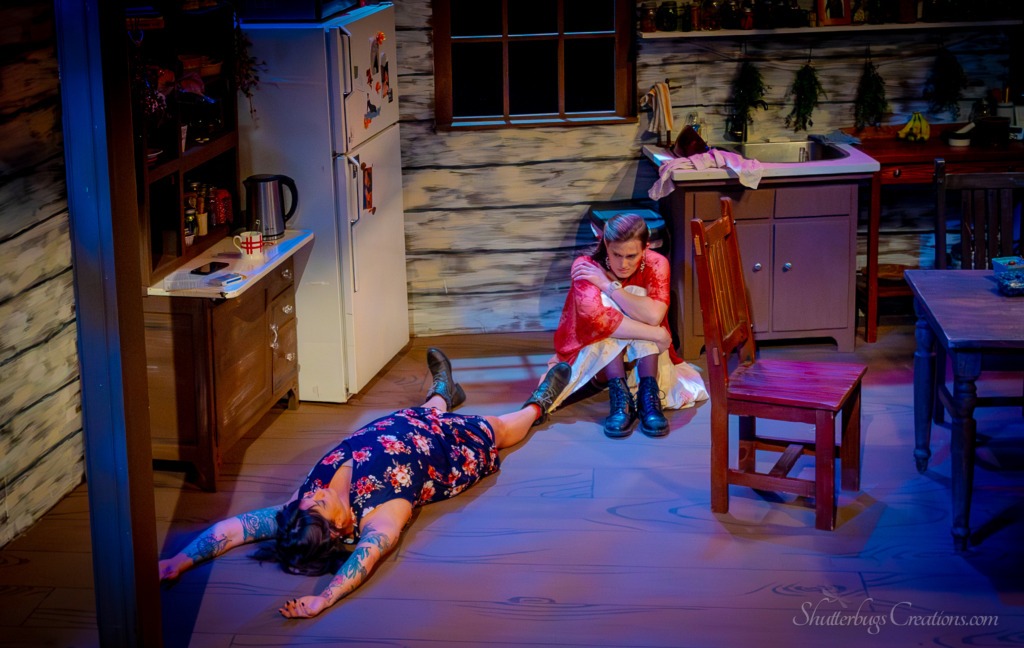
Visually, the show is rather stunning. Simone Schneeberg, credited as the show’s scenic and properties designer, has perfectly encapsulated this timeless-yet-modern home interior. It could be a cabin in the woods, it could be a house on a thriving suburban street, either of which lends itself nicely to the witchcraft-voodoo-realism that permeates the show’s narrative. Schneeberg is detail oriented and the paintwork in the scenic design is striking, as are the way each of the ingredient jars are filled, giving you that sense of mythical existence once the Kim character starts pulling them off the shelves and working with them. Part of the disconnect, with this particular production, however, is the sound work (Sound Designer Angélica G. Huertas) and the lighting (Lighting Designer Felix Clarke) and they way it misaligns/misfires throughout. Huertas crafts an ambient track to signify nighttime but it’s really unclear as to where this ‘nighttime’ is. There are repetitive loops of sound happening that include muffled voices, what sounds like cars, and also a long stretch of a cat purring. It feels disjointed from whatever interior world is happening— there seems to be a heavy component of secrecy and perhaps wooded exterior based on the ‘dragging’ and ‘re-entering’ and textual references (I don’t want to spoil the plot, as it’s quite a shocker)— and that just doesn’t align with Huertas’ sound work. Where Huertas does succeed is in having those ‘dance’ moments, when the music pipes through the speakers into the kitchen, cluing us into the fact that this is modern, and the girls get to ‘dance it out.’ Clarke’s lighting work has similar issues, though the odd shifts in lighting feel a bit more like misfired cues than disjointed misalignment.
The costumes for the show, though very simplistic, are quite chic and do just enough of that mesmeric movement, particularly on Kim, to give that witchy-voodoo vibe. It’s cottage core plus modernity, trying to hide one’s true self in fashion in plain sight and it’s working. Costume Designer Jaya S. Basu has done well with the show’s sartorial selection, especially as it’s essentially one costume for each character, until they change into their respective robes, technically both of which belong to Kim.
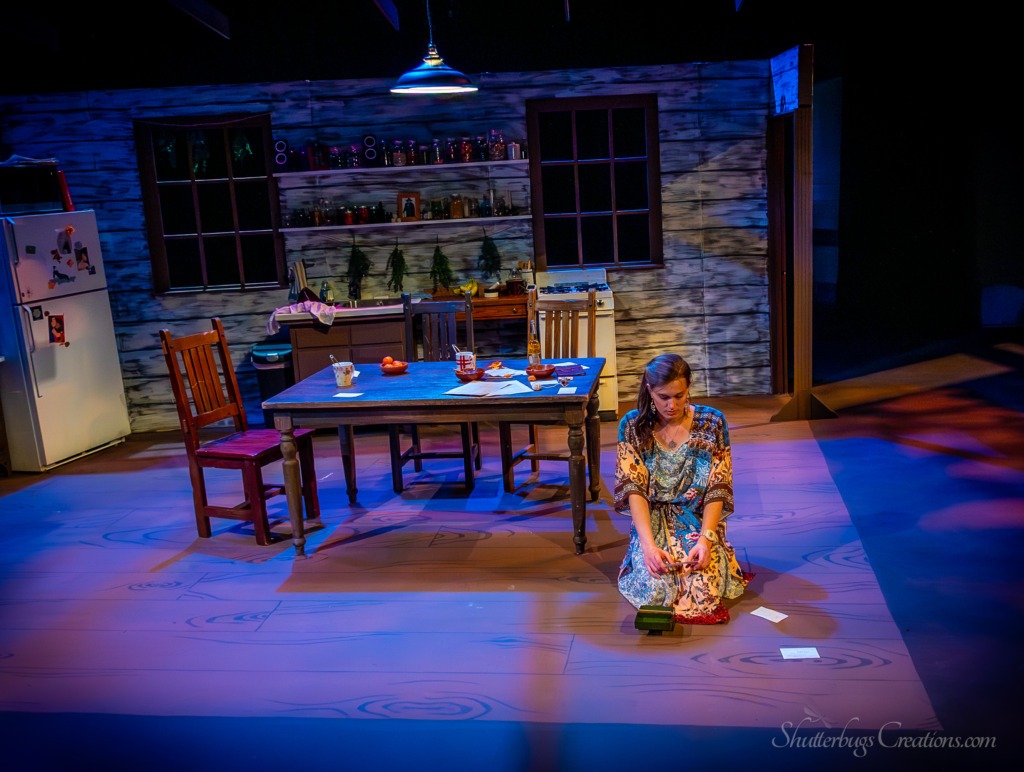
Playwright Stephen Spotswood has a strong foundation for a solid piece of work that presently has a lot of potential. The topics are deeply important, though it feels a little like there are too many ‘heavy issues’, admittedly they often come deeply intertwined, fighting for the focal attention of the narrative. And perhaps if the play, as written, were fleshed out into a longer, two-act show the dueling components of what wants central attention could be weighted equally in the play. The story feels like it’s trying so hard to be a post-traumatic growth story, particularly for the Trans-Woman character of Kim, but there are moments where it feels like this could be augmented or highlighted or honed in on, and it’s just glossed over or missed. This is particularly true when the spell-work comes into play. There’s a line that gets blipped over— talking about how Kim was told by her grandmother that it probably wouldn’t even work for her because that type of work was woman’s work (this could actually be brought into the opening scene of mixing the potion but that feels like a directorial choice that will be addressed momentarily.) and there are other moments throughout the script where things could really land to uplift Kim’s narrative and they just aren’t there. This is true but in reverse for the Ellen character. We the audience don’t get nearly enough of her story— and that’s fine if she were only a blip character in Kim’s narrative, but as the other half of this two-hander, and as the script says— best friend since 7th grade (or thereabouts and it’s never disclosed specifically how old these women are…there’s context clues that Ellen is married with a kid and trying to get her tattoo artist career off the ground but that doesn’t do much to clarify anything other than ‘beyond high school’) it feels like there should be more. Given the circumstances of how Ellen’s character ends up in the house in the first place and what gets learned, it’s understandable why Spotswood withheld so much of the story— as that often aligns with the generalized narrative of ‘we don’t get to know why’ when it comes to this particular topic (again, trying not to divulge spoilers) but it also feels dissatisfying in regards to Ellen as a whole. Spotswood has solid work but it feels like it either needs to be tightened and refocused slightly or more fully fleshed out and pushed into a longer, two-act work.
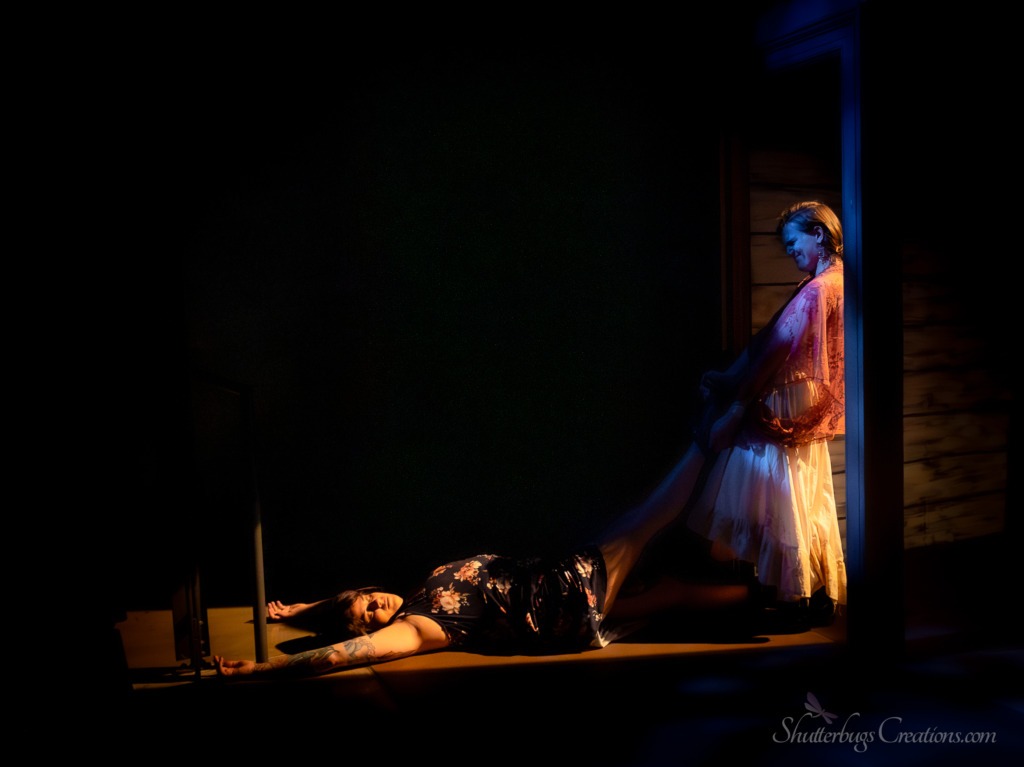
Director Lauren Patton Villegas has some moments in this play that work extremely well— like the way she stages each of the women out of the actual scenic box of the house’s interior to be in that ‘bathroom’, splashing water on their respective faces, clearly staring into a ‘mirror’ and having that moment of ‘how the hell do I do this’ with themselves silently, that’s really brilliant staging— and she has some moments that feel counterintuitive to the script, almost as if its fighting what the text is saying. Initially, when the Kim character drags Ellen into the house— and that is truly hysterical, struggling with the body, trying to get her deadweight arms to stay in place, etc.— you get this sense that something dramatic is about to happen. Kim approaches the ‘spell cards’ looking for answers, and finds it, but then the urgency dies. The mixing of that potion— given what it’s meant to do— desperately feels like it’s crying out for a frenetic, exasperating pace and could be the perfect moment to import that sense of ‘I need to this to work, not only because when it does it solves a big problem but it also validates that claim of I am a real woman and was told as a TransWoman that this spell work wouldn’t work for me because it’s ‘woman’s work’. It feels somewhat casual in its pacing and its execution and given the severity of what the spell does, it just feels off. There are moments with the pacing throughout the performance where it just doesn’t match the urgency or intensity of the text. But then there are moments where Villegas has given these two actors exactly what they need (and mad-props and shoutout to Intimacy & Fight director Alana Isaac for her role in this production) to really land a moment. A personal favorite, which is a humorous one, that comes to mind is the one where Kim asks if people really ask if her house is haunted and the whip-smart retort that Ellen delivers is this perfect trifecta of script writing, acting, and directed delivery; a stunning moment of humorous syzygy between the pair. And there are moments like that, both funny and serious, throughout the performance as guided by Villegas, they just aren’t as consistently occurring throughout the entirety of the work.
Willow Kyteler, as Kim, and Alex Aspiazu, as Ellen, have an incredible working camaraderie and bonded sense of expression on stage in this production. Kyteler’s strength as a performer comes in her expressive nature, whether it’s those extremely emotive facial expressions, especially when delivering more somber and weighted pathos, or the way she engages her full body to accentuate the comedy or severity of a moment as it unfolds on stage, you’re getting a fully invested expressive experience from her as Kim. There’s also an earnest vulnerability to the way Kyteler expresses the character of Kim, particularly when she starts divulging and confessing her previous attempts at magic-voodoo work to Ellen. Kyteler runs the gauntlet of emotions in this production and does a fine job navigating the narrative dissonance of who’s story this is meant to be. It feels unevenly skewed whilst simultaneously trying to be both of their stories, but Kyteler and Aspiazu both have a firm handle on navigating their respective character tracks.
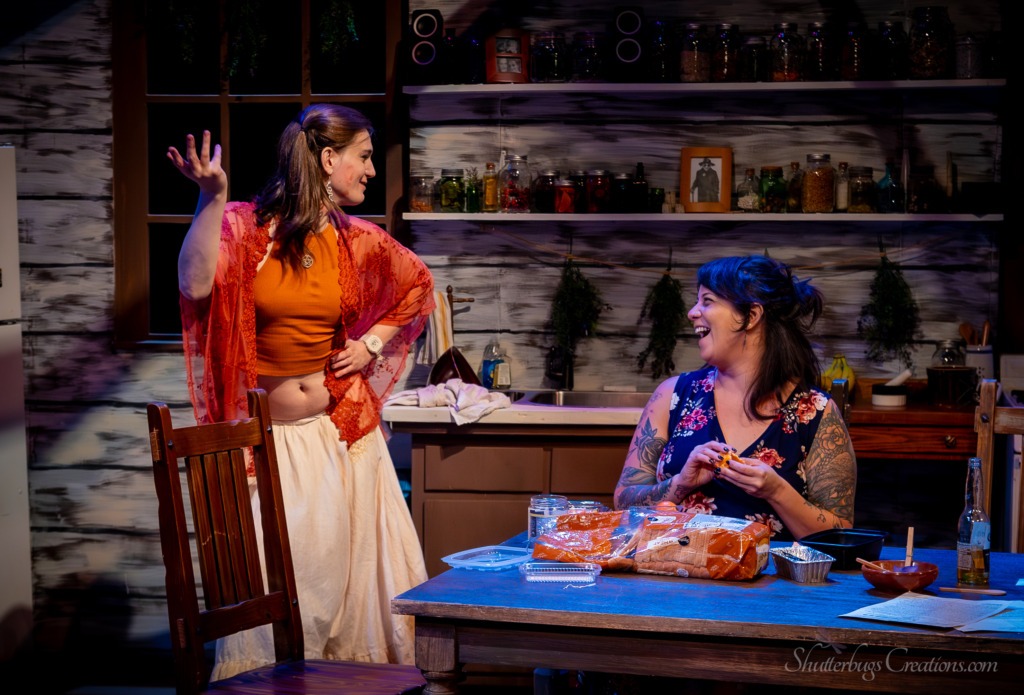
There’s more of a frenetic unhinged existence inside of Aspiazu’s Ellen; if Kyteler is the becalmed yin, Aspiazu is the spastic yang and they pair perfectly together. There’s an edginess and almost a defensiveness to the way Aspiazu brings Ellen to life, particularly when trying to determine what the actual truth is in regards to what’s happening inside the house. Aspiazu has her moments of heavy truth as well, particularly when sitting at the table, reading over the letter. When confronted with that undeniable moment you can feel a dramatic shift in energy, shared between the pair of them, and when Kyteler delivers that fury-driven line about not being allowed to help, and Aspiazu just absorbs it— there’s something blindsiding and powerfully connective happening between them in that moment. Both women have fierce stage presences, impressive dance skills, and a keen sense of comedic timing, which serves the script well.
The production is such an important one because of the myriad of difficult topics it tackles. There’s even an extra beauty to it because it delves unabashedly into the realm of magical-voodoo-realism. It just feels like it has more potential and needs to be a little less at war with itself. Definitely worth a look— between the impressive actors and the gorgeously detailed set— catch Where Dead Women Go to Dance running through the middle of October with Theatre Prometheus.
Running Time: Approximately 85 minutes no intermission
Where Dead Women Go to Dance plays through October 17th 2026 as a Theatre Prometheus production at Montgomery College Cultural Arts Center— 7995 Georgia Ave, Silver Spring, MD 20910. Tickets can be purchased at the door or in advance online.