
author: Steven Wilson
Themes of mortality, sexuality, ambition, dishonesty, and greed take center stage as Other Voice Theatre presents Cat on a Hot Tin Roof.
Tennessee Williams’s Pulitzer Prize-winning play brings us into the plantation home of the Pollitt dynasty, wealthy Mississippi cotton planters. The family’s watchword seems (unintentionally) to be “mendacity,” the quality of dishonesty and, more specifically, living a lie. And lies abound. Big Daddy Pollitt is dying of cancer, but his family, his pastor, and his doctor are all hiding the news from him, nominally so he can enjoy his 65th birthday.
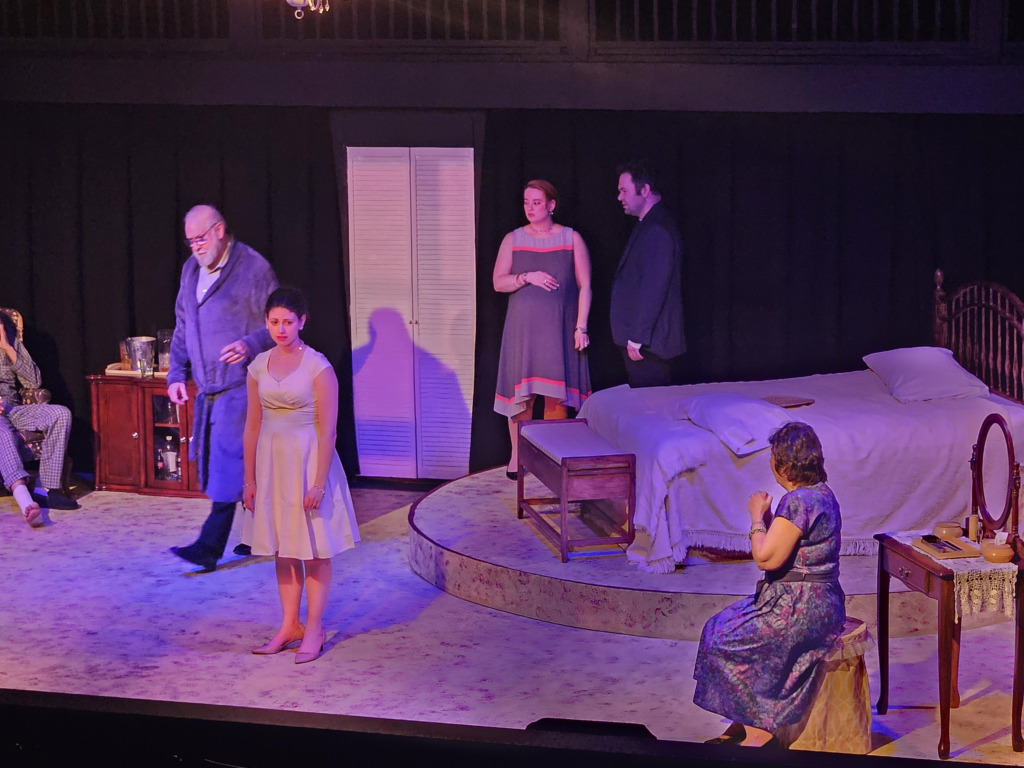
Brick, the favored son, is lying to himself, trying hard to believe that his relationship with his dead best friend, Skipper, was “pure,” by which he presumably means “completely heterosexual.” (Also presumably, the name “Skipper” was not quite as on-the-nose in 1955 is it sounds in 2026.)
Big Daddy, for his part, is lying to everyone, implicitly, in maintaining his 40-year marriage to a woman he does not love, or even like, does not desire, and does not respect. He says he doesn’t even like the way she smells. In the patriarch’s defense, he is very honest with his son, Brick, in a powerful second-act scene in which he reveals his dreams for his legacy.
Maggie, the “Cat” of the title, trapped on the figurative hot tin roof that is life in the Pollitt family, is perhaps the only honest character. She recognizes her husband’s feelings for Skipper, realizes the depths of his alcoholic grief, and even expresses admiration (citing Classical Greek poetry) for the beauty of Brick’s love for Skipper. That doesn’t seem to be getting her the grandson and heir that she, and Big Daddy, want.
Most notable in this production is a great use of space. The theatre at Performing Arts Factory is a unique venue to begin with, and the production design is top-notch thanks to Set Designer Jeff Elkins and Scenic Artist Christine Levy.
Lighting design by Stephen Knapp brought a beautifully executed space to dramatic life, recreating sunsets, moonlit nights, and fireworks for the audience.
Set design well-represented the main image of the play—that we, like the family, are the audience that should never be in the room with the marital bed. Yet here we are, uncomfortably intimate with private pain.
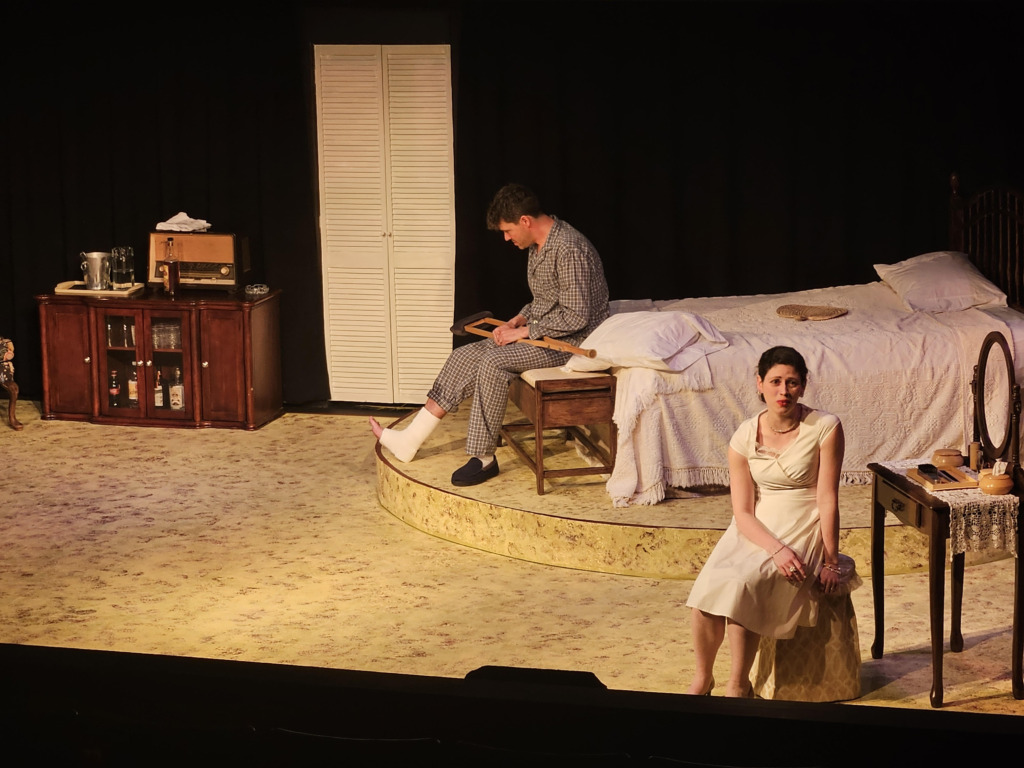
The opening night performance was remarkably free of first-night slip-ups, a testament to hard work by the cast and directors Diane Causer and Pat Dickinson.
Standout performers were Ron Terbush as Big Daddy Pollitt and Angela Thompson as his wife, (you may have guessed) Big Mama. Thompson especially brought out the agony of a proper Southern matriarch confronted with dissent and strife in her Better Home and Garden.
One perhaps-missed opportunity in this production was the humorous potential of the character interactions. The subject matter–impending death and the avarice of the dying man’s family–is dark. Still, there is humor in pain. When Brick’s pre-teen nephews and niece find him prone on the floor of his bedroom and ask what happened, his response (“I tried to kill your Aunt Maggie. I failed. Then I fell.”) has the potential to be one of the funniest lines ever uttered on stage. It’s understandable to miss that opportunity in the high drama that’s just occurred (the attempted murder), but the humor could have contrasted and underscored the just-broken tension.
All-in-all, an honest effort to bring thought-provoking drama to the community.
Running Time: Approximately 2 hours 15 minutes with one intermission.
Cat on a Hot Tin Roof plays through March 15, 2026 with Other Voices Theatre Other Voices Theatre at The Performance Factory— 244-B South Jefferson Street in Frederick, MD. Tickets are available by calling the box office at (301) 662-3722 or by purchasing them in advance online.